HomeVisitAboutMinistriesEventsMessagesGive Sign in

Messages

Blessed Is He Who Comes in the Name of the Lord

September 13, 2026 · Brian Hunter

Scripture referenced

The passage this message was preached from, in full, with every other passage it reached for.

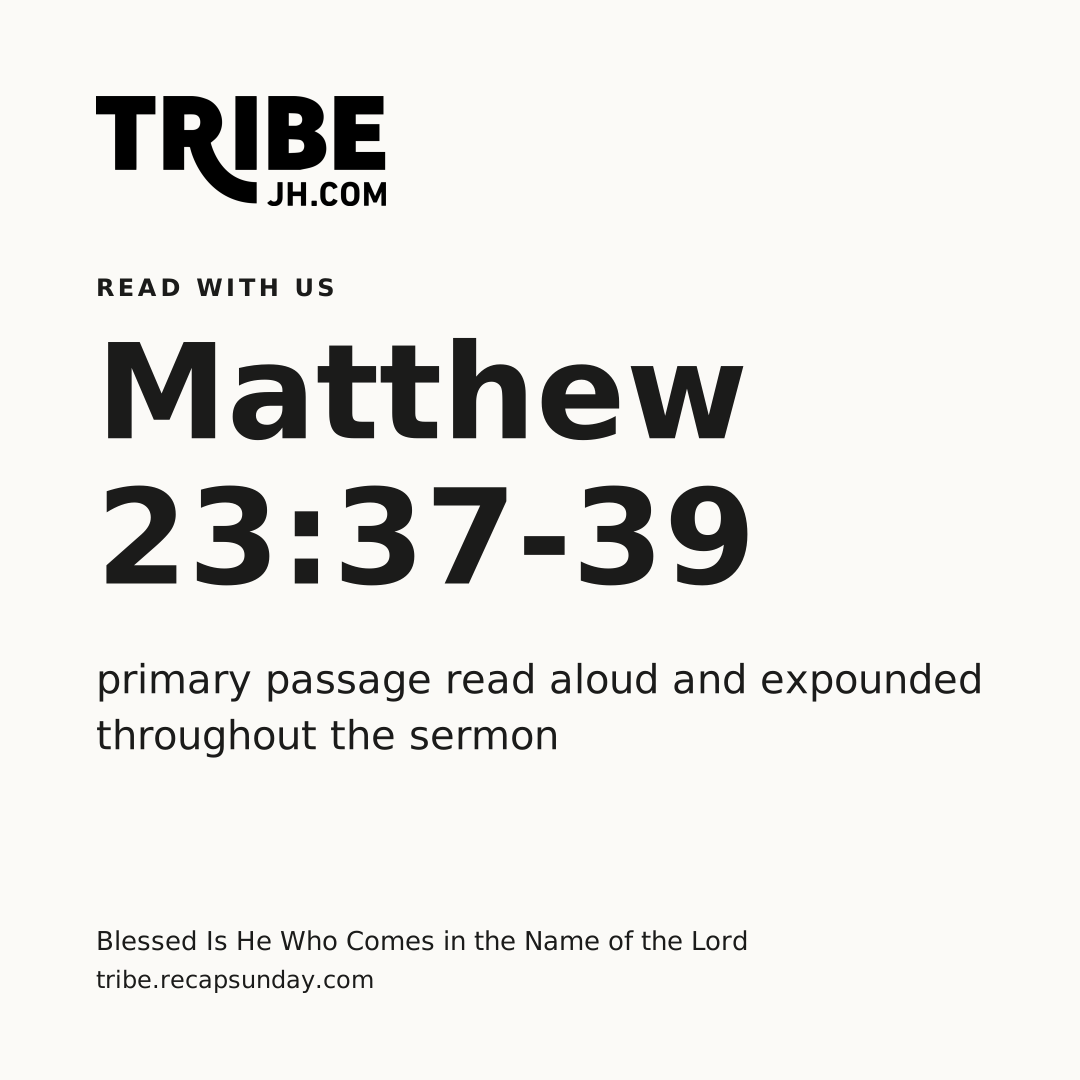
  • Matthew 23:37-39 primary passage read aloud and expounded throughout the sermon

    37 “Jerusalem, Jerusalem, who kills the prophets, and stones those who are sent to her! How often I would have gathered your children together, even as a hen gathers her chicks under her wings, and you would not!

    38 Behold, your house is left to you desolate.

    39 For I tell you, you will not see me from now on, until you say, ‘Blessed is he who comes in the name of the Lord!’”

    World English Bible · Read it in another translation

    Keep this verse

Matthew 22

identified as Jesus's final address to the general public

1 Jesus answered and spoke to them again in parables, saying,

2 “The Kingdom of Heaven is like a certain king, who made a marriage feast for his son,

3 and sent out his servants to call those who were invited to the marriage feast, but they would not come.

4 Again he sent out other servants, saying, ‘Tell those who are invited, “Behold, I have prepared my dinner. My cattle and my fatlings are killed, and all things are ready. Come to the marriage feast!”’

5 But they made light of it, and went their ways, one to his own farm, another to his merchandise,

6 and the rest grabbed his servants, and treated them shamefully, and killed them.

7 When the king heard that, he was angry, and sent his armies, destroyed those murderers, and burned their city.

8 “Then he said to his servants, ‘The wedding is ready, but those who were invited weren’t worthy.

9 Go therefore to the intersections of the highways, and as many as you may find, invite to the marriage feast.’

10 Those servants went out into the highways, and gathered together as many as they found, both bad and good. The wedding was filled with guests.

11 But when the king came in to see the guests, he saw there a man who didn’t have on wedding clothing,

12 and he said to him, ‘Friend, how did you come in here not wearing wedding clothing?’ He was speechless.

13 Then the king said to the servants, ‘Bind him hand and foot, take him away, and throw him into the outer darkness. That is where the weeping and grinding of teeth will be.’

14 For many are called, but few chosen.”

15 Then the Pharisees went and took counsel how they might entrap him in his talk.

16 They sent their disciples to him, along with the Herodians, saying, “Teacher, we know that you are honest, and teach the way of God in truth, no matter whom you teach, for you aren’t partial to anyone.

17 Tell us therefore, what do you think? Is it lawful to pay taxes to Caesar, or not?”

18 But Jesus perceived their wickedness, and said, “Why do you test me, you hypocrites?

19 Show me the tax money.” They brought to him a denarius.

20 He asked them, “Whose is this image and inscription?”

21 They said to him, “Caesar’s.” Then he said to them, “Give therefore to Caesar the things that are Caesar’s, and to God the things that are God’s.”

22 When they heard it, they marveled, and left him, and went away.

23 On that day Sadducees (those who say that there is no resurrection) came to him. They asked him,

24 saying, “Teacher, Moses said, ‘If a man dies, having no children, his brother shall marry his wife, and raise up offspring for his brother.’

25 Now there were with us seven brothers. The first married and died, and having no offspring left his wife to his brother.

26 In the same way, the second also, and the third, to the seventh.

27 After them all, the woman died.

28 In the resurrection therefore, whose wife will she be of the seven? For they all had her.”

29 But Jesus answered them, “You are mistaken, not knowing the Scriptures, nor the power of God.

30 For in the resurrection they neither marry, nor are given in marriage, but are like God’s angels in heaven.

31 But concerning the resurrection of the dead, haven’t you read that which was spoken to you by God, saying,

32 ‘I am the God of Abraham, and the God of Isaac, and the God of Jacob?’ God is not the God of the dead, but of the living.”

33 When the multitudes heard it, they were astonished at his teaching.

34 But the Pharisees, when they heard that he had silenced the Sadducees, gathered themselves together.

35 One of them, a lawyer, asked him a question, testing him.

36 “Teacher, which is the greatest commandment in the law?”

37 Jesus said to him, “‘You shall love the Lord your God with all your heart, with all your soul, and with all your mind.’

38 This is the first and great commandment.

39 A second likewise is this, ‘You shall love your neighbor as yourself.’

40 The whole law and the prophets depend on these two commandments.”

41 Now while the Pharisees were gathered together, Jesus asked them a question,

42 saying, “What do you think of the Christ? Whose son is he?” They said to him, “Of David.”

43 He said to them, “How then does David in the Spirit call him Lord, saying,

44 ‘The Lord said to my Lord, sit on my right hand, until I make your enemies a footstool for your feet?’

45 “If then David calls him Lord, how is he his son?”

46 No one was able to answer him a word, neither did any man dare ask him any more questions from that day forward.

World English Bible · Read it in another translation

Keep this verse

Matthew 24

identified as Jesus's final message to his disciples

1 Jesus went out from the temple, and was going on his way. His disciples came to him to show him the buildings of the temple.

2 But he answered them, “You see all of these things, don’t you? Most certainly I tell you, there will not be left here one stone on another, that will not be thrown down.”

3 As he sat on the Mount of Olives, the disciples came to him privately, saying, “Tell us, when will these things be? What is the sign of your coming, and of the end of the age?”

4 Jesus answered them, “Be careful that no one leads you astray.

5 For many will come in my name, saying, ‘I am the Christ,’ and will lead many astray.

6 You will hear of wars and rumors of wars. See that you aren’t troubled, for all this must happen, but the end is not yet.

7 For nation will rise against nation, and kingdom against kingdom; and there will be famines, plagues, and earthquakes in various places.

8 But all these things are the beginning of birth pains.

9 Then they will deliver you up to oppression, and will kill you. You will be hated by all of the nations for my name’s sake.

10 Then many will stumble, and will deliver up one another, and will hate one another.

11 Many false prophets will arise, and will lead many astray.

12 Because iniquity will be multiplied, the love of many will grow cold.

13 But he who endures to the end, the same will be saved.

14 This Good News of the Kingdom will be preached in the whole world for a testimony to all the nations, and then the end will come.

15 “When, therefore, you see the abomination of desolation, which was spoken of through Daniel the prophet, standing in the holy place (let the reader understand),

16 then let those who are in Judea flee to the mountains.

17 Let him who is on the housetop not go down to take out the things that are in his house.

18 Let him who is in the field not return back to get his clothes.

19 But woe to those who are with child and to nursing mothers in those days!

20 Pray that your flight will not be in the winter, nor on a Sabbath,

21 for then there will be great oppression, such as has not been from the beginning of the world until now, no, nor ever will be.

22 Unless those days had been shortened, no flesh would have been saved. But for the sake of the chosen ones, those days will be shortened.

23 “Then if any man tells you, ‘Behold, here is the Christ,’ or, ‘There,’ don’t believe it.

24 For there will arise false christs, and false prophets, and they will show great signs and wonders, so as to lead astray, if possible, even the chosen ones.

25 “Behold, I have told you beforehand.

26 If therefore they tell you, ‘Behold, he is in the wilderness,’ don’t go out; ‘Behold, he is in the inner rooms,’ don’t believe it.

27 For as the lightning flashes from the east, and is seen even to the west, so will be the coming of the Son of Man.

28 For wherever the carcass is, that is where the vultures gather together.

29 But immediately after the oppression of those days, the sun will be darkened, the moon will not give its light, the stars will fall from the sky, and the powers of the heavens will be shaken;

30 and then the sign of the Son of Man will appear in the sky. Then all the tribes of the earth will mourn, and they will see the Son of Man coming on the clouds of the sky with power and great glory.

31 He will send out his angels with a great sound of a trumpet, and they will gather together his chosen ones from the four winds, from one end of the sky to the other.

32 “Now from the fig tree learn this parable. When its branch has now become tender, and produces its leaves, you know that the summer is near.

33 Even so you also, when you see all these things, know that it is near, even at the doors.

34 Most certainly I tell you, this generation will not pass away, until all these things are accomplished.

35 Heaven and earth will pass away, but my words will not pass away.

36 But no one knows of that day and hour, not even the angels of heaven, but my Father only.

37 “As the days of Noah were, so will be the coming of the Son of Man.

38 For as in those days which were before the flood they were eating and drinking, marrying and giving in marriage, until the day that Noah entered into the ship,

39 and they didn’t know until the flood came, and took them all away, so will be the coming of the Son of Man.

40 Then two men will be in the field: one will be taken and one will be left.

41 Two women will be grinding at the mill: one will be taken and one will be left.

42 Watch therefore, for you don’t know in what hour your Lord comes.

43 But know this, that if the master of the house had known in what watch of the night the thief was coming, he would have watched, and would not have allowed his house to be broken into.

44 Therefore also be ready, for in an hour that you don’t expect, the Son of Man will come.

45 “Who then is the faithful and wise servant, whom his lord has set over his household, to give them their food in due season?

46 Blessed is that servant whom his lord finds doing so when he comes.

47 Most certainly I tell you that he will set him over all that he has.

48 But if that evil servant should say in his heart, ‘My lord is delaying his coming,’

49 and begins to beat his fellow servants, and eat and drink with the drunkards,

50 the lord of that servant will come in a day when he doesn’t expect it, and in an hour when he doesn’t know it,

51 and will cut him in pieces, and appoint his portion with the hypocrites. That is where the weeping and grinding of teeth will be.

World English Bible · Read it in another translation

Keep this verse

Matthew 23

identified as Jesus's final address to the religious leaders

1 Then Jesus spoke to the multitudes and to his disciples,

2 saying, “The scribes and the Pharisees sat on Moses’ seat.

3 All things therefore whatever they tell you to observe, observe and do, but don’t do their works; for they say, and don’t do.

4 For they bind heavy burdens that are grievous to be borne, and lay them on men’s shoulders; but they themselves will not lift a finger to help them.

5 But all their works they do to be seen by men. They make their phylacteries broad, enlarge the fringes of their garments,

6 and love the place of honor at feasts, the best seats in the synagogues,

7 the salutations in the marketplaces, and to be called ‘Rabbi, Rabbi’ by men.

8 But don’t you be called ‘Rabbi,’ for one is your teacher, the Christ, and all of you are brothers.

9 Call no man on the earth your father, for one is your Father, he who is in heaven.

10 Neither be called masters, for one is your master, the Christ.

11 But he who is greatest among you will be your servant.

12 Whoever exalts himself will be humbled, and whoever humbles himself will be exalted.

13 “Woe to you, scribes and Pharisees, hypocrites! For you devour widows’ houses, and as a pretense you make long prayers. Therefore you will receive greater condemnation.

14 “But woe to you, scribes and Pharisees, hypocrites! Because you shut up the Kingdom of Heaven against men; for you don’t enter in yourselves, neither do you allow those who are entering in to enter.

15 Woe to you, scribes and Pharisees, hypocrites! For you travel around by sea and land to make one proselyte; and when he becomes one, you make him twice as much a son of Gehenna as yourselves.

16 “Woe to you, you blind guides, who say, ‘Whoever swears by the temple, it is nothing; but whoever swears by the gold of the temple, he is obligated.’

17 You blind fools! For which is greater, the gold, or the temple that sanctifies the gold?

18 ‘Whoever swears by the altar, it is nothing; but whoever swears by the gift that is on it, he is obligated?’

19 You blind fools! For which is greater, the gift, or the altar that sanctifies the gift?

20 He therefore who swears by the altar, swears by it, and by everything on it.

21 He who swears by the temple, swears by it, and by him who has been living in it.

22 He who swears by heaven, swears by the throne of God, and by him who sits on it.

23 “Woe to you, scribes and Pharisees, hypocrites! For you tithe mint, dill, and cumin, and have left undone the weightier matters of the law: justice, mercy, and faith. But you ought to have done these, and not to have left the other undone.

24 You blind guides, who strain out a gnat, and swallow a camel!

25 “Woe to you, scribes and Pharisees, hypocrites! For you clean the outside of the cup and of the platter, but within they are full of extortion and unrighteousness.

26 You blind Pharisee, first clean the inside of the cup and of the platter, that its outside may become clean also.

27 “Woe to you, scribes and Pharisees, hypocrites! For you are like whitened tombs, which outwardly appear beautiful, but inwardly are full of dead men’s bones, and of all uncleanness.

28 Even so you also outwardly appear righteous to men, but inwardly you are full of hypocrisy and iniquity.

29 “Woe to you, scribes and Pharisees, hypocrites! For you build the tombs of the prophets, and decorate the tombs of the righteous,

30 and say, ‘If we had lived in the days of our fathers, we wouldn’t have been partakers with them in the blood of the prophets.’

31 Therefore you testify to yourselves that you are children of those who killed the prophets.

32 Fill up, then, the measure of your fathers.

33 You serpents, you offspring of vipers, how will you escape the judgment of Gehenna?

34 Therefore behold, I send to you prophets, wise men, and scribes. Some of them you will kill and crucify; and some of them you will scourge in your synagogues, and persecute from city to city;

35 that on you may come all the righteous blood shed on the earth, from the blood of righteous Abel to the blood of Zachariah son of Barachiah, whom you killed between the sanctuary and the altar.

36 Most certainly I tell you, all these things will come upon this generation.

37 “Jerusalem, Jerusalem, who kills the prophets, and stones those who are sent to her! How often I would have gathered your children together, even as a hen gathers her chicks under her wings, and you would not!

38 Behold, your house is left to you desolate.

39 For I tell you, you will not see me from now on, until you say, ‘Blessed is he who comes in the name of the Lord!’”

World English Bible · Read it in another translation

Keep this verse

Psalm 118:22

the stone the builders rejected has become the cornerstone, linked to Jesus as the rejected cornerstone

22 The stone which the builders rejected has become the cornerstone.

World English Bible · Read it in another translation

Keep this verse

Psalm 118:24

this is the day the Lord has made, quoted as familiar camp song

24 This is the day that Yahweh has made. We will rejoice and be glad in it!

World English Bible · Read it in another translation

Keep this verse

Psalm 118:25

please Lord please save us, please Lord please give us success

25 Save us now, we beg you, Yahweh! Yahweh, we beg you, send prosperity now.

World English Bible · Read it in another translation

Keep this verse

Psalm 118:26

blessed is the one who comes in the name of the Lord, identified as the source Jesus was quoting in Matthew 23:39

26 Blessed is he who comes in Yahweh’s name! We have blessed you out of Yahweh’s house.

World English Bible · Read it in another translation

Keep this verse

Recap

The message in order, in a few minutes of reading.

Pastor Brian opened Matthew 23:37-39 with a group of IDF reservists in the room for the second Sunday in a row, and used Jesus's lament over Jerusalem to work toward a personal question: where have you been treating Jesus as a secondary option rather than the cornerstone of your life?

What was said

Jesus's words in Matthew 23 come at a specific moment. Chapter 22 was his final address to the general public, chapter 24 would be his private words to his disciples, and chapter 23 is his final address to the religious leaders. That context matters, because the things he says there are blunt in a way that would have felt offensive to the people he was speaking to, and Brian said that was intentional.

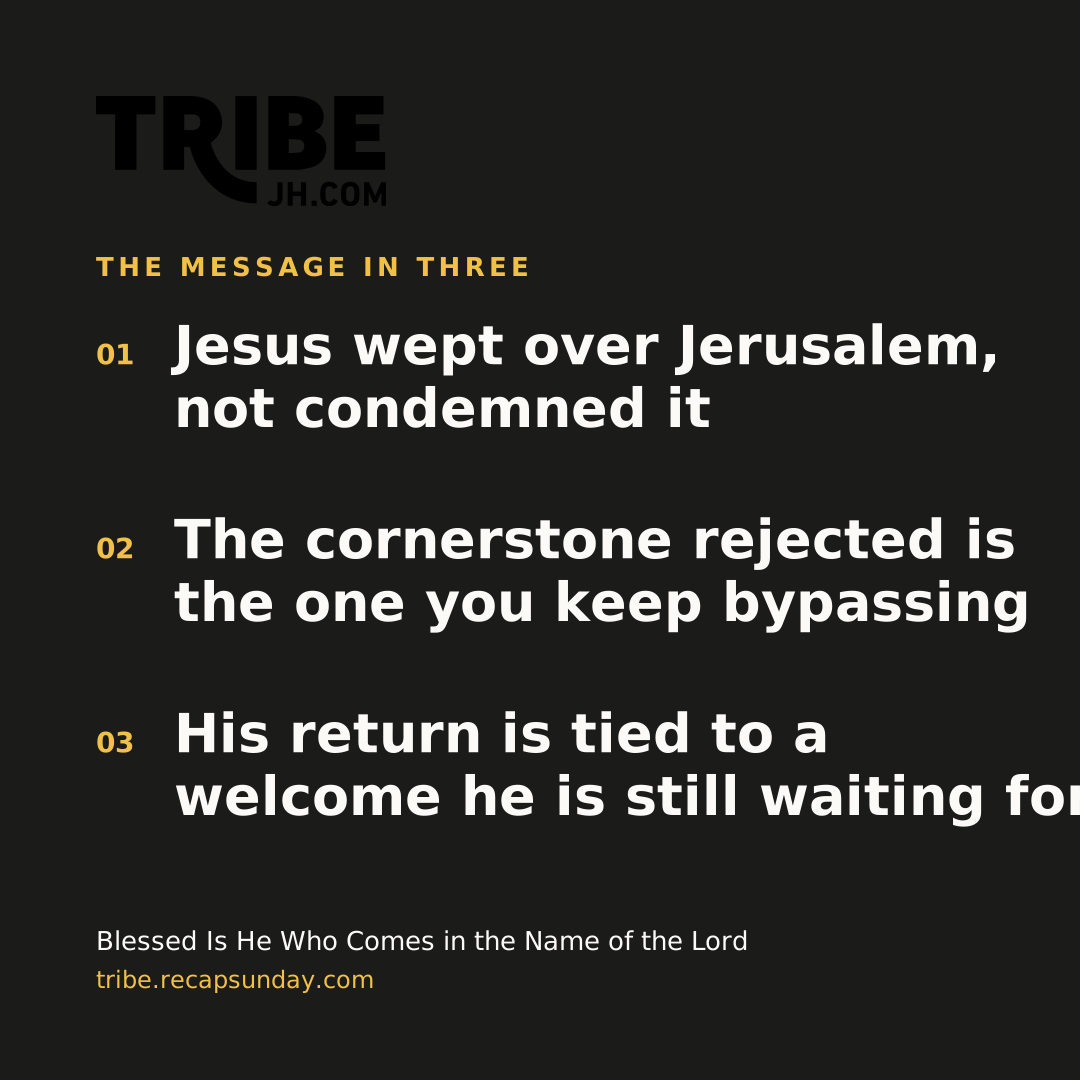
The emotion behind "O Jerusalem, Jerusalem" was where the message started. Whether Jesus said it once with overwhelming feeling or literally twice, the literary repetition in the text is there to carry weight. Brian pointed to the gospel accounts where Jesus wept over the city, and suggested the tears are audible in the words. What followed was not condemnation but longing, the image of a hen wanting to gather her chicks, and the grief of being refused.

Verse 38, "your house is left to you desolate," would have sounded absurd to anyone standing in the crowded temple courts during Passover week. Brian described it as a deliberate provocation, Jesus saying something so ironic that people would stop and think. Spiritually, the temple was already empty. Prophetically, he was describing what the Romans would do to Jerusalem roughly forty years later.

Verse 39 sets a condition on Jesus's return. He will not be seen again until the words "blessed is he who comes in the name of the Lord" are spoken. That phrase is not something Jesus invented. He was quoting Psalm 118, and Brian walked through how a rabbi's listeners would have instantly recognized the reference and filled in the surrounding text themselves, including verse 22: "the stone that the builders rejected has now become the cornerstone." By quoting that psalm, Jesus was pointing directly at what the religious leaders had done to him and telling them plainly who he was.

What will it take for Israel to say those words and fulfill the condition Jesus placed on his return? Brian said he would answer that next week. For the remaining time, he turned the cornerstone image toward the people in the room.

The Hebrew word for "rejected" in Psalm 118:22, Brian explained, does not only mean to throw something away outright. It also means to treat something casually, to esteem it lightly, to use it as an addition rather than a foundation. He asked whether anyone in the room had been doing that, not rejecting Jesus as Savior but quietly making him a secondary or tertiary option while trying to handle a difficult situation on their own. He invited people to put up their hands, prayed over those who did, and closed with the image of Jesus saying "get in here" to anyone willing to come back under his wings.

Touch points

Things you could actually do this week.

  • Think about one area of your life where you have been trying to figure things out on your own and have not made Jesus your first option, and bring it to Him in prayer this week.
  • Read Psalm 118 in full so you can see the passage Brian was drawing from and sit with what verse 22 says about the cornerstone.
  • Read all of Matthew 23 to understand who Jesus was speaking to and why his words there were so pointed.
  • If you have been bumping your head against a hard situation, take a moment this week to stop scheming and specifically ask Jesus into that situation by name.
  • Come to the closing prayer and worship evening at the TMC when Tribe announces it, and be part of marking what God did there before that chapter closes.

Doing a Bible study?

Here is a guide we have prepared for you: the passages in order, questions for the group, and room to write.

  1. Brian described Jesus weeping over Jerusalem and then saying 'your house is abandoned and desolate' to a crowd in a packed, bustling temple. What does it tell you about Jesus that his words came from grief rather than contempt?
  2. Brian said Jesus 'loves to afflict the comfortable' and that if you have never been offended by Jesus you probably have not walked with him very long. Has there been a moment when something Jesus said genuinely offended or unsettled you, and what happened when you sat with that?

and 3 more questions in the guide

Open the study guide

Resumen en español

El mensaje resumido, en español.

Brian tomó como punto de partida las palabras de Jesús en Mateo 23:37-39, donde Jesús llora sobre Jerusalén con una mezcla de angustia, lamento y frustración, porque quiso reunir a su pueblo como una gallina reúne a sus polluelos, pero ellos no quisieron. Brian explicó que estas palabras fueron el último mensaje de Jesús a los líderes religiosos de su tiempo, y que aunque el templo estaba lleno de gente en esos días previos a la Pascua, Jesús declaró que la casa estaba espiritualmente abandonada y desolada, una afirmación que también resultó ser profética: cuarenta años después, Roma destruyó Jerusalén y el templo.

El pasaje central de la noche fue el versículo 39, donde Jesús dice que no será visto de nuevo hasta que Israel diga "bendito el que viene en el nombre del Señor." Brian señaló que Jesús estaba citando el Salmo 118, y que los líderes religiosos habrían reconocido de inmediato la conexión con el versículo 22 de ese mismo salmo: "la piedra que los constructores rechazaron se ha convertido en la piedra angular." Con eso, Jesús les estaba diciendo sin rodeos que ellos eran los constructores que habían rechazado la piedra más importante. Las condiciones para el regreso de Jesús, y lo que llevará a Israel a decir esas palabras, serán el tema de la semana siguiente.

Para cerrar, Brian dirigió la conversación hacia cada persona presente. Explicó que la palabra "rechazar" en hebreo no solo significa desechar por completo, sino también tratar algo con indiferencia o darle un lugar secundario. La pregunta que dejó fue personal: ¿hay algún área de tu vida donde has estado tratando a Jesús como una opción más, en lugar de como la piedra angular? Invitó a quienes se identificaran con eso a reconocerlo ante Dios y a volver a hacer de Jesús su primera opción, y varios en la congregación respondieron levantando la mano para recibir oración.

---

Pasajes bíblicos usados

  • Mateo 22 (mensaje final de Jesús al público general, mencionado como contexto)
  • Mateo 23:37-39 (texto principal de la noche)
  • Mateo 24 (mensaje final de Jesús a sus discípulos, mencionado como contexto)
  • Salmos 118:22, 24-26
Read the full transcript 5,644 words
0:01 Brian HunterHere we are. Evening service. We still gotta get used to it. Saying good evening. Right, Liz?
0:09 Good evening. Good evening. Did everybody have a good, fun, productive Sunday? Yes. Yeah.
0:18 It's it's great. You get to, like, go do stuff on the weekends, come to church in the evening, The start of your whole week. So, I I'm liking this. Also, we there's a lot of like room for us to grow and until we fill this place with kids downstairs and us old grown ups upstairs, there's a lot of room for activities. Dancing in the back during worship.
0:49 If you were like, oh, I'm a banner swirler arounder, and but we just we didn't have room to do that at Tribe, at the TMC because you'd poke somebody's eye out. We got room for banners where you won't poke anybody's eye out, and if you're like, oh, no. Is this one of those banner churches? Yeah. He said banner.
1:14 Yes. We are a banner church, number one. Number two, you just never know. One might get put in your hands, and before you know it, you're leading the banner ministry. Here's something else that that that we haven't had at the TMC.
1:30 We got room upfront for altar calls. Now, now, now, now, now, I can respond to the invitation of the lord right here in my seat. Of course, you can but how many of you, you don't need to raise your hand but how many of you went to a church where the preacher, like, he drew the line and invited you to take a step of faith that could look like maybe standing up or raising your hands or coming down front, taking care of business with the Lord. We got room to take care of business with the Lord up front at church. So pray yes, just as I am with good old Billy Graham altar call.
2:18 Alright. So, I'm on my computer today. Normally, I I like to print it, but today, I'm on my computer. If you're taking notes this evening, you can write at the top of your notes the title of the conversation that we're going to have this evening. The title of the conversation that we're going to have this evening is called blessed is he who comes in the name of the lord.
2:45 It comes on the heels of the special guests that we had last week. If you were here last week or you tuned in to the live stream, you saw that we had 12 different 12 guys from Israel, from the IDF who are reservists, who you guys have been praying for, who we raised some funds to help offset cost for meals, and the trip lead, Ali and Bobby, were like, oh, it'd be just so awesome if we had one or two. Well, they all came. Which was awesome. And so, we'll share more stories in the in the coming weeks.
3:30 But I just wanted to let you know that the seeds that were planted as a in their hearts as a result of coming to church last Sunday have have really taken root in their hearts and lives. Incredible conversations as a result of this and asking deep, hard questions and it it's been really amazing and so, this is the second consecutive week that we've got some Israelis in the room and so glad that y'all are here. Once again, you're gonna get both barrels of the gospel. If you have a Bible with you this more this. Thank you.
4:13 Yeah. It's a good call response opportunity. Yes. Yeah, I still want you to talk to me. And help me out.
4:24 I know I know you are, Nancy. If you have a Bible with you this evening, let's turn to the gospel of Matthew, and we're gonna be in goss and we're gonna be in Matthew chapter 23. We're gonna read verses 37 through 39. And I'm going to turn there myself. One of the distinctives at Tribe, we'll see how long of a season the Lord will allow us to do this, but I still want us to a, be conversational.
5:05 So I want us to talk to one another and for us to engage with the text together, number one. Number two, I still want us to be able to ask questions and make comments consider the word as we have a conversation about this. So we have a mic in the room for where we record every service, so that people who are traveling for sports, or this or that, will be able to tune back in to the livestream, and they'll get to hear your comments. So that's why we have a mic in the room. Would somebody please read Matthew chapter 23 verses 37 through 39.
5:47 37 through 39. And I'm turning there myself with my glasses. Okay.
5:56 Speaker 2Sure. Okay. Jerusalem, Jerusalem, you who kill the prophets and stone those sent to you, how often how I have longed to gather your children together. As a hen gathers her cheek chicks, her cheeks, her cheek, chicks under her wings and you were not willing. Look, your house is left to you desolate.
6:19 For I tell you, you will not see me again until you say, blessed is he who comes in the name of the Lord. Okay.
6:28 Brian HunterSo to give you a little bit of context, if you look at Matthew just flip in your Bible just so you can see this. Matthew chapter 22, this is Jesus's final message to the general public. You can write that, like, in your bible as a little note. His final address to the general public happens in Matthew chapter 22. Now, stay with me.
6:58 Keep your eye on the ball. Matthew chapter 24. Oh, good. This is Jesus's final message to his disciples. Now, Matthew chapter 23.
7:17 This is Jesus's final address or message to the religious leaders of the day. So, Matthew chapter 22, we see Jesus sharing his heart with general population. People that were there to to hear him, perhaps followed his ministry. Matthew chapter four, it's almost like he's huddled up with just his guys. He's like, guys, come here.
7:46 Lean in close. I wanna share something with you. And he addresses them with a different tone and uses different words and talks about different things. Matthew chapter 23, it's really important if you were to read all of Matthew chapter 23. It's really important to know who he's talking to because he says some very stern, difficult, challenging, dare I say, blistering things in Matthew chapter 23 and it's important.
8:23 We do have the title, Jesus criticizes the religious leaders but it's important for you to know that Jesus will often as you go through the gospels, you can see him time and time again. He will give comfort to the afflicted but he loves to afflict the comfortable. I didn't come up with that. No. No.
8:51 Just so you know. Matthew chapter 23, we see these words. Let me just read them again verses 37 through 39. Oh, Jerusalem. Jerusalem.
9:05 Did he actually say Jerusalem, Jerusalem? Question. Yes or no? It's red. Okay.
9:17 Yeah. It's the red letters of your Bible. So, it's one of two things. He either said, oh, Jerusalem, Jerusalem which would fit. It, I mean, we do that today Or when he said Jerusalem, it was with such emotion.
9:37 Perhaps he only said it once, but it was with such powerful emotion welling up in his soul for the city of the great king that when the authors were writing the biography of Jesus and they were capturing the words, they're like, how can we how can we convey the emotion? How about we say it twice? Oh, Jerusalem. Jerusalem. That is a biblical literary technique.
10:07 So so he could have just said it once. Oh, Jerusalem. Or perhaps, he said it twice. Either way, conveys the same thing. The city that kills the prophets and stones God's messengers.
10:27 You would think if this is such a violent and wicked place that he would have words of condemnation for Jerusalem. But look at the very next sentence. How often I have wanted to gather your children together as a hen protects her chi her as a hen protects her chicks beneath her wings. But, you wouldn't let me. And now, look, your house is abandoned and desolate, for I tell you this, you will never see me again until you say blessings on the one who comes in the name of the Lord.
11:14 What I'd like to do is look at several aspects of each of these verses as we go on a journey that's going to that we will arrive at a destination that is closer to you than your next breath. We're starting with the words of Jesus that were spoken two thousand years ago about a place that is thousands of miles away. That's where we're starting our conversation tonight. But where we will end, the destination that we all will arrive at will be a place of intimacy and introspection and invitation for you that is intimate and personal. So, if you hear me talking about Israel and Jerusalem again, the lord must know, the lord knows that you must need it, number one.
12:09 Number two, don't worry. It's coming to a point for you. Look at verse 37. We'll put it up here on the screen. Oh, screen.
12:18 Oh, Jerusalem, Jerusalem, the city that kills the prophets and stones god's messengers. How often I have wanted to gather your children together as a hen protects her chicks beneath her wings but you wouldn't let me. If you were to attach some emotions to the words of Jesus in that verse alone, what emotions would you attach that you think, oh, I think that Jesus could be feeling these feels as he says these words. You can just say it. What would be one emotion?
12:53 Anguish. Anguish. Uh-huh. Heart wrenching, heart wrenching, perhaps anguish. Oh, frustration.
13:05 Frustration. Yeah. I'm I'm yeah? But you wouldn't let me. Ah, that's the frustration part.
13:14 Yeah. Okay. Okay. What other emotions? Pity.
13:19 Pity. Yeah. Now if he is god's son, Jesus said, if you've seen me, you've seen the father. If he also says, the father and I are one. So, he is god.
13:38 He could've just did like a and made them. Come unto him so that he could embrace and hold them. But that's a pretty cool thing about the God that we serve. He will never violate our free will. He will never override our chooser.
14:07 Except in very rare extreme circumstances because he's god and he can do it if he wants to. I gotta be honest to what is in the text. We see examples more of that in the old testament but I just gotta be faithful. Careful with my words. I'll give an account for every word I say.
14:28 Mark that down. What else what other emotions might you see? Lament. Say it again. Lament?
14:37 Oh. Yeah. Lament. I see brutal honesty. He wasn't trying to gloss it over.
14:46 Oh, it's okay. It's okay.
14:53 Speaker 2Sadness.
14:54 Brian HunterSadness. So now, this is interesting because I I was looking up the other gospel accounts. As as he comes over from the town at that time was called Bethpage, Beth Bethany and he was beginning to look over into the city of Jerusalem. He wept over the city of Jerusalem. In the gospel accounts, the biographers don't link those two moments together of Jesus weeping over the city of Jerusalem and these specific words but if you read in other accounts as he weeps over the city of Jerusalem, it's almost easy to see the tears in the words that he says.
15:42 Verse 37. Now, let's go to verse 38. And now, look, your house is abandoned and desolate. Let's put ourselves in the feet, in the feet, let's put ourselves in the place of Jesus listening to watching the people around. Let's put ourselves in the feet of the crowd, not Jesus.
16:11 So, we'll hear Jesus's words. He's probably giving these words out in what's known as the court of the Gentiles where all kinds of people could gather. He's saying these words and then he says, and now, look, your house is abandoned and desolate. If you were listening to Jesus's words in that day and you heard him say that, what's the first thing you would likely do? Are we talking about the same Jerusalem that that I think you are, Jesus?
16:48 Because in that day, when he said those words, the temple was bustling with activity. These words were just before Passover week and so, so pilgrims from all over the Northern Kingdom and the Southern Kingdom were coming together to celebrate the feast of Passover. The temple was bustling and packed to the gills. Think of it as the temple being as crowded as the town square on fourth of July weekend. Lord, have mercy.
17:21 So why does he say, and now look. That word look in Greek means to consider, to think about, to contemplate, to actually look around. Now look, your house is abandoned and desolate. Why would he say that? He's he's speaking in metaphorical language.
17:48 Good work, Andrew. He's speaking spiritually, spiritually speaking, the house, the temple is abandoned and desolate. Now, is he being accurate? Spiritually speaking. Well, of course, he's Jesus.
18:12 Is he being accurate physically? No, because he's speaking spiritually. This is one of the teaching techniques that Jesus often used when he addressed the crowd. He would say something incredibly ironic so that people would be like, wait, what? And if people chose to get offended, well, just imagine the smear campaign.
18:37 How he would be cancelled. Like, Jesus claims that the temple has been abandoned and desolate. That a quote from Jesus over like the webcam shot looking out over the courts of the with the markets and the animals and the people everywhere. Like, Your house has been abandoned and desolate. He meant spiritually abandoned and desolate.
19:05 Now, let's put ourselves in the shoes of the Pharisees. If they, when they heard those words, the leading religious authorities of those days, when they heard those words, what do you think flashed through their mind? They would they would feel betrayed. Okay. Alright.
19:28 What else? Insulted. Insulted. Deeply insulted and offended. How dare you say Imagine walking into a church that's packed to the gills and be like, this place is empty and dead.
19:43 Those are some powerful words. Insulting, offensive. And it was one of Jesus' favorite tactics when addressing or speaking to religious leaders. There are other instances and times where he was gentle and soft and kind and patient, but we got to remember who he was speaking to. He was using language.
20:19 His language wasn't offensive but his message was very offensive. And I would suggest to you that from time to time, in order for Jesus to get through your thick skull, why would you nudge your spouse like that? Jesus has to offend you. Have you ever been offended by Jesus? You haven't walked with him very long and you can't say that you are in close relationship with Jesus.
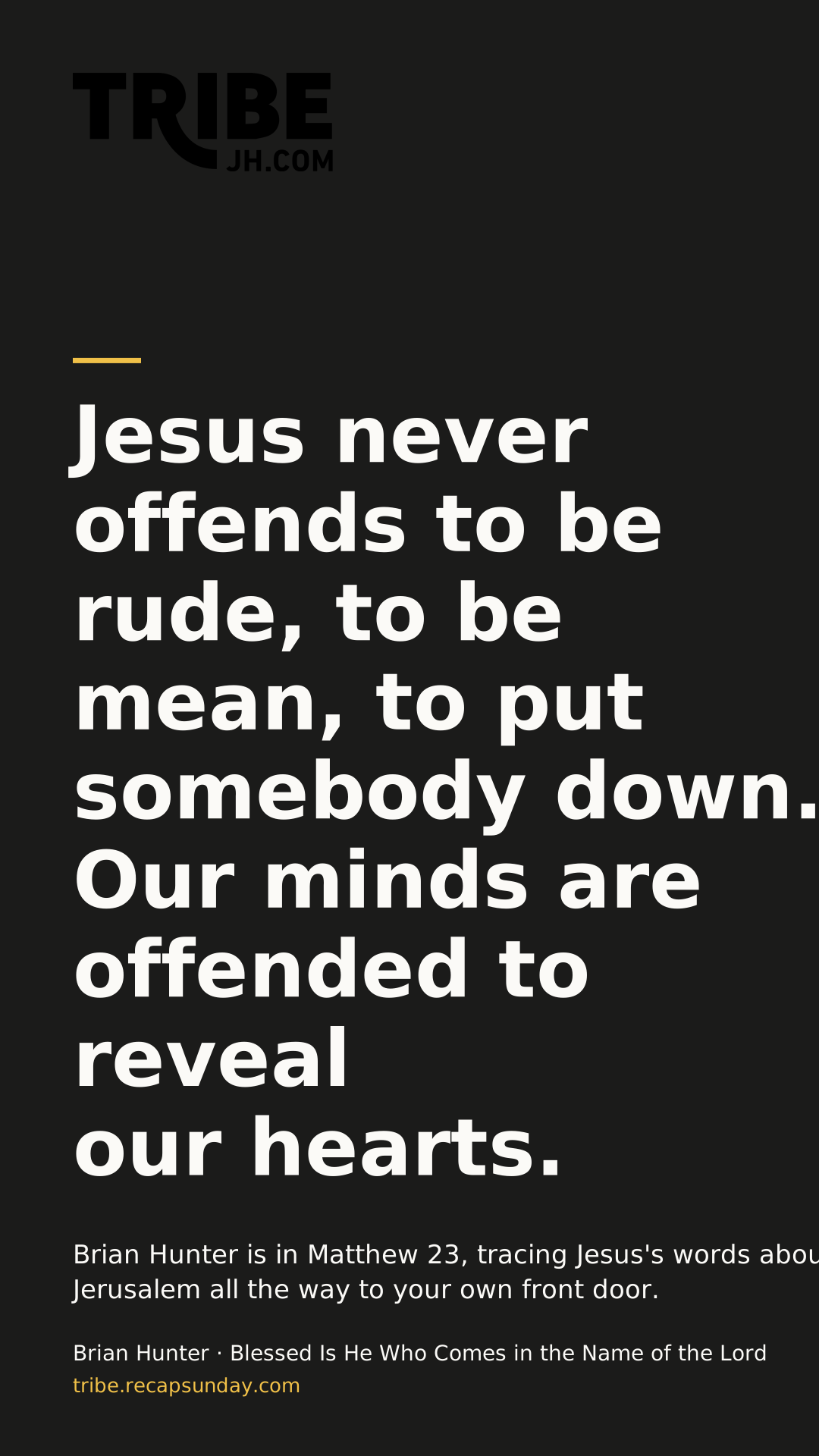
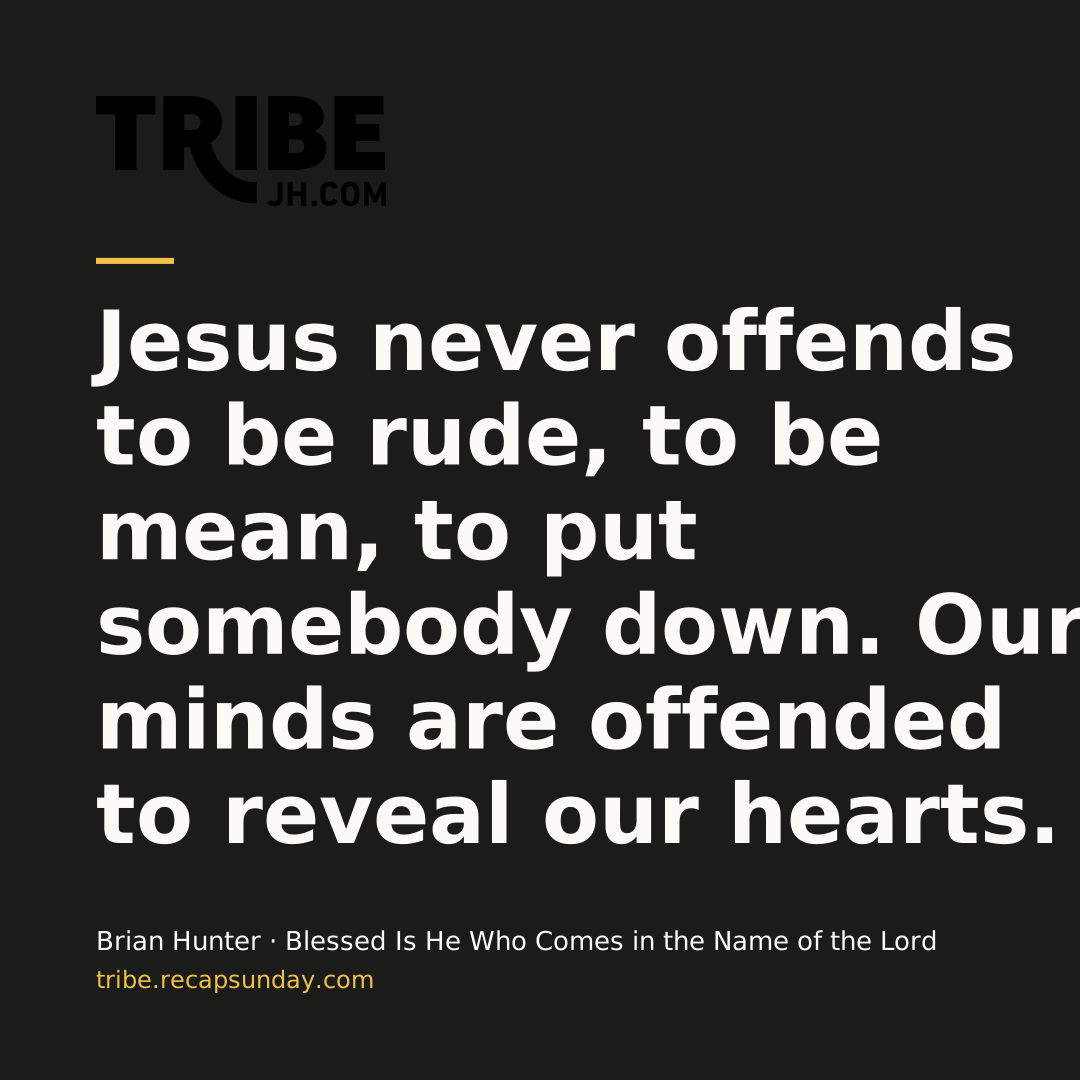
20:53 If you haven't been offended by him. But Jesus never offends to be rude, to be mean, to to put somebody down Our minds are offended to reveal our hearts. And a mature follower of Jesus even though they might get offended. Oh, that makes me so mad. Well, go away five deep breaths, and then be like, oh man, the Holy Spirit was actually right.
21:33 Oh, then there's an opportunity to submit and surrender and grow. Jesus spoke these words in verse 38 and now look, your house is abandoned and desolate. So, not only was he speaking spirit in spiritual terms but he was also speaking prophetically. Why? How?
21:53 How do we know that he was speaking prophetically? Forty years ish later, Romans sack Jerusalem burning it to the ground, burning the temple to the ground. So this is how like, forget chat GPT trying to write anything for you. Nobody says it better than Jesus. He was speaking to offend the Pharisees to reveal their hearts.
22:27 He was speaking spiritually and in that one statement, he was speaking prophetically about of events that would unfold within the next forty years. Alright, let's look at this next, the next verse. We put that next verse up there. Verse 39, for I tell you this, you will never see me again until you say blessings on the one who comes in the name of the lord. Have you ever thought about what condition Jesus placed on his return for the religious leaders, people living in Jerusalem to be able to see him again.
23:18 You're not going to see me again until let's play fill in the blank. I like to ask these thought provoking questions about the text to get your mind thinking in new and fresh ways. For many of you who have read this passage in your Bible over and over and over, you need to just kind of kind of tumble through those words from the next passage to the next passage but think about this. Let's play a game called fill in the blank. Jesus said, you will not see me again until what would have been something else that Jesus could have said to fill in the blank that either would have been nicer or softer or maybe better or easier to swallow.
24:04 What could he have said? For I tell you this, you will never see me again until you say, what would have been better? Let's play Jesus could have said it better. What? Nobody dares try that.
24:22 Okay. They won't go down on your permanent record. This is just a pretend game, okay? What could he have said?
24:31 Speaker 2Until you say, I'm the king of kings and the warlord.
24:35 Brian HunterYeah. And until you, I'm not going to come back until you recognize that I'm the king of kings. Alright. Alright. How about this?
24:42 You will not see me again until how about a date? I mean, not like, hey, can we go on a date? I mean, like, give us a date. Like, the year 2000 In the year 2030, you will not see me again until 2027? 2020 alright.
25:10 How about how about a month? Anybody wanna go for it? Come alright. Come on. What if he had just set a date?
25:19 You will not see me again until and then set a date. Alright. Well, that would have been something. How about you'll not see me again until you accept me as your Messiah? Make sense?
25:37 But here's what he says. You will not see me again until you say, blessed is he who comes in the name of the lord. I thought I was going to be safe and like try to pronounce some Hebrew and none of y'all would know how bad I butcher it but here it goes. In Hebrew, that phrase, that phrase is Baruch haba bashem adonai. You'll not see me again until you, he's speaking to religious leaders, Jews, all of Israel, until you say, Baruch haba bashem aronai.
26:26 Now that phrase was not something that he coined. He was quoting a familiar song and this is a a technique that rabbis often teach with. They would begin a they would begin a Psalm and then go on to the next point or maybe they would quote the end of the Psalm and it was the job of the hearer to make the connections and know what the teacher was talking about. Like, you know, if you were to just, I don't know, like like, say some lyrics of a song. Now here's a little story I got to tell.
27:25 Nobody's gonna help me out. Okay. Yeah. Maybe I should've yeah. I could've picked some Lisa's like, don't go with that.
27:36 Nobody knows the Beastie Boys. They're certainly not gonna quote the Beastie Boys in church, and they're never gonna do it in a Baptist church. So, alright. I I set myself up for a mess up on that. But if you quote a part of us, a line to a song that everybody knows, and now all of my songs that everybody knows are completely running out of my head and I can't think of it.
27:57 In a similar way, a rabbi would quote a a part of a passage and it was up to the listener to be able to fill in the blanks and be like, oh, I know where he's going. So do you know that when Jesus said, blessed is, you'll not see me again until you say, blessed is he who comes in the name of the lord. He was quoting from the Bible that people were like, oh, I know this. And if we sat under a rabbi and he did this to us all the time, we would know to turn in our bibles to Psalms one eighteen. Let's do that.
28:30 Psalms one eighteen is what Jesus was quoting from. Look at verse twenty four and twenty six. This is the day the Lord has made. We will rejoice and be glad in it. Remember when you sang that song in the morning at church camp?
28:55 Yep. Verse 25, please, Lord, please save us. Please, Lord, please give us success. And then look at verse 26. Blessed is the one who comes in the name of the Lord.
29:16 The religious leaders of the day would have instantly made the intended hyperlink that connects the entire Psalm. So, Jesus, it helps us to know the entire or a little bit more context. So, let's rewind in our Bibles to verse 22. The stone that the builders rejected has now become the cornerstone. This is the lord's doing, and it is wonderful to see.
30:00 So Jesus says in Matthew 23, he's talking to the religious leaders, and he says, you'll not see me again until you say, blessed is he who comes in the name of the lord. Their minds, the hearers of those words in that day instantly made a hyperlink to Psalms 118 and a part of Psalms 118, the critical piece of Psalms 118 is verse 22. The stone that the builders rejected has now become the cornerstone. What is Jesus without saying a word? What is he alluding to?
30:40 Who he was and what they had done. They were the builders that rejected the stone that was the cornerstone. Jesus is essentially saying, I am the cornerstone that you have rejected. He torqued them off. I don't not sure if you can say that in a baptist church but we'll allow it tonight.
31:10 He really petted their cat the wrong way. Jesus is saying, am the cornerstone you've rejected and you'll not see me again until there is a dramatic shift in your hearts and you welcome me back as your Messiah, the cornerstone. So here's my question. What in the world would be the catalyst? What in the world would or will it take for religious leaders of that day and two thousand additional years of history?
31:54 What will it take for Israel to say, blessed is he who comes in the name of the Lord? Jesus placed a condition. We know that he's coming back. And we cry out for him to come back. Maranatha, the Lord has come and the Lord will come.
32:17 But look at the words of Jesus. He places a condition for his return. I'm not gonna show back up on the scene until you, Israel, and Jews around the world say, blessed is he who comes in the name of the Lord. Meaning, the Messiah, the cornerstone that they rejected. What will it take for that to happen?
32:52 You're scrunching your eyebrows. You're thinking, it's gotta be pretty big. Right? It's gotta be monumental. It's gotta be colossal.
33:04 It's gotta be dramatic. It's gotta be unmistakable. I'm gonna share with you what are the conditions or the the the atmosphere in which Israel will say, is he who comes in the Lord. In the name of the Lord. I'm gonna share that with you next week.
33:33 This week, for the last few moments that we have left, I wanna talk about you. Because we read that that passage, the stone that the builders have rejected has now become the cornerstone. My friend, Eric Davis, he planted the church cornerstone here in Jackson. He's a few years he's got a few more birthdays than than we do here at Tribe. But I love that he named his church Cornerstone.
34:09 It's beautiful. Look at Psalms 18 at verse 22. Stone that the builders rejected has now become the cornerstone. If you look at that word reject in Hebrew, it has a powerful meaning. It does mean to outright reject, to throw away, away, to discard, put it in the junk pile.
34:48 That's going away. Unusable, unwanted, reject. But it also means to treat casually. To esteem lightly. To not take serious.
35:16 To add it in as an addition but not the primary, not the foundation, not the most important. All kinds of stones are used to build a construction for construction when you're using stone. But there's one stone, that's the most prominent and even has some engineering significance to it that it bears more weight than all of the other stones. So in Psalm 22 where it says, the stone that the builders rejected, not only does it mean to just cast aside and and forget and turn your back on and walk away from, but it also means to just treat casually, to treat flippantly. And so I told you that at the beginning of our conversation, we're gonna talk about a group of people that are far away, in a place that is far away when Jesus addresses the crowd at a time that was a long time ago, but we're gonna end our journey this evening talking about you.
36:30 So the question is, is there an aspect or an area of your life this evening that you have treated the cornerstone as casual? Flip it. You would say, I I would never reject Jesus. I would never do that. Great.
37:04 Good for you. But do you find yourself bumping up against the situation in this season that you're in right now where the Jesus option is like secondary tertiary or fourth area. I don't know what the fourth is. You're trying well, I'm gonna figure this out myself. I'm gonna I'm gonna read about this.
37:32 Oh, I'm gonna take a class on that. I'm gonna and you're trying all of these other options. And you haven't turned to him? Do you know that what you are doing? I'll be honest with you.
37:47 What you are doing is Psalms one eighteen twenty two. You've rejected the cornerstone. So here's the good news. Tonight, whatever that situation that you find yourself in, difficult, can't find your way out of it or you keep banging your head against it or you're frustrated or there's pain associated around that. Tonight, be the in kind of like treated in as commonplace or casual.
38:33 I repent, and I want to make the Jesus option the primary go to. So what's that look like? I'm gonna give you some privacy here in just a moment, and you just take care of some business with the Lord. And you just talk to him from your heart, and say, Lord, I'm sorry that I've been plotting and scheming and trying to figure this out on my own. Trying to do this my own way, whatever that situation is.
39:06 And I'm sorry that I have rejected you, the not do to Holy Holy Spirit. Spirit to whisper do do to our hearts. Thank you, Lord. We love you, Jesus. Thank you, Lord.
41:22 So in the stillness of this moment, maybe you're taking care of some business with the Lord that's good. I'd like to pray for you, but I'd like to know who I'm praying for. So nobody's looking around right now. You're just your eyes are closed and you're dealing with the Lord. But would there be anybody in here this evening that would say, oh, man.
41:46 I really feel like whatever it is that I've been knocking my head up against, I've been trying to address this, whatever it is, in my own strength. I've not rejected Jesus as savior, but he's kind of like not been my go to option. I've been trying to deal with this on my own. And tonight, I need to grab that cornerstone again and make and and go for the Jesus option. I'd like to pray for you, but who would I be praying for?
42:22 Just put your hand up. Man, that's so good. Yeah. That's awesome. Calm one, I wanna pray for you.
42:32 You could you can put your hands down. Look at me. Connor, would you put that Hebrew phrase back up there? Yeah. You can pronounce it any way you want.
42:50 He gets it. But in the stillness of your heart, would you just say that? And welcome him into that situation in your life and in your heart. Father, I pray for my friends that raised their hands that are like, ugh. I've been trying all kinds of other stones.
43:16 I've treated Jesus casually. And tonight, Jesus, I say, Hashem, Adonai. Just welcome him back into your heart. Let's sing this song one more time. Can we stand?
43:45 We're almost done here this evening, but let's make Jesus once again the cornerstone of our life. So I saw this picture in my mind's eye while we were singing a moment ago. The words of lament that he said long time ago are undone and joy floods his heart when you let him gather you under his wings. That's what you're doing in that that that ministry moment of surrender. That you've been outside from underneath his wings in that area of your life.
46:14 But this evening, you're like, okay. And he doesn't say, no. It's too late. No room for you under my wing. He just says, y'all come in here.
46:23 Get in here. Get in here. Oh, I just know like a smooth way to do it. So let's worship the Lord one other way before we get out of here. Stay standing.
46:37 Stay standing. We worship the Lord in song, which we did at the beginning of this evening. We worship the Lord through connecting and engaging and considering and submitting to his word. And we worship the Lord with our tithes and offerings. And we don't pass buckets here at Tribe, but you can scan that QR code.
47:01 There's also a little black box out in the lobby that if you filled out a connect card, you can drop that in there as well. And announcement, the main thing that I need to let you know before I pray over you to dismiss you is we have the TMC under contract. So that's super exciting if you are familiar with real estate. You know, they've they've funded an escrow account. So like they put their earnest money down.
47:38 They have a due diligence period. They may ask for a reduction or two. But in Jesus name, I'll just say that they'll find the TMC in such great order that they're like, we should pay you more than what we offer for. Why not? Right?
47:52 Right? And then we're looking at a closing date of on or before October 2. Really soon. Really soon. Praise the Lord.
48:03 That was a great reaction. We'll let you know we gotta do we opened up the TMC. Remember we got done beating the pants off of some other kickball team, and then we went over to the metaphorically speaking. And then we went over to the TMC because we just got the keys, and we were in there praying. And let's do another prayer and worship evening to close down the TMC.
48:27 So we'll we'll let you know about when that is, but I just wanted to share that great news with you. Is that good news y'all? Whoo. Last verse and then you I Oh, you got more singing tonight. She's got more singing tonight.
48:43 Should I pray over them now or do you wanna No. You pray. Alright. I'll pray. I'll pray she'll sing you out.
48:49 Lord Jesus, thank you so much for our tribe fam here this evening. I command a blessing over their lives. Thank you Lord that they are men and women who are quick to run under the shadow of your wings. That you would protect them. That you would be the corner stone of their life.
49:12 Thank you for all the amazing wonderful things that you're doing in their life. And Lord, thank you for guiding us with everything that that the TMC has gone through. And thank you Lord for our dear friends and like our older brother that's letting us stay at his sleep on his couch for up to twenty four months. Twenty three almost. Yeah.
49:36 Twenty three months here at First Beat. So we command a blessing over their building and over their congregation as well. We pray these things in Jesus' name, the strong son of God. And everybody said Amen. Amen.
49:49 Alright. Lizzie got one more verse.

Share this message

Every word on these came out of the message. Download one and post it anywhere.
Pull quote, dark
Pull quote, light
Pull quote, colour
Story and Reel
Scripture
Three points

Written up from the message given at Tribe. If something here reads oddly, the recording is the record.

Come find us

First Baptist Jackson Hole, 90 W Kelly Ave · Sundays at 5:00 pm

Sign in to save messages and keep notes

Written up by Recap Sunday