The passage this message was preached from, in full, with every other passage it reached for.
1 Thessalonians 4:1-8Read aloud by a congregation member; the central passage for the sermon, with verse 7 as the key focus
1 Finally then, brothers, we beg and exhort you in the Lord Jesus, that as you received from us how you ought to walk and to please God, that you abound more and more.
2 For you know what instructions we gave you through the Lord Jesus.
3 For this is the will of God: your sanctification, that you abstain from sexual immorality,
4 that each one of you know how to control his own body in sanctification and honor,
5 not in the passion of lust, even as the Gentiles who don’t know God;
6 that no one should take advantage of and wrong a brother or sister in this matter; because the Lord is an avenger in all these things, as also we forewarned you and testified.
7 For God called us not for uncleanness, but in sanctification.
8 Therefore he who rejects this doesn’t reject man, but God, who has also given his Holy Spirit to you.
Read from the screen and discussed to contrast common versus holy, sinful desires versus giving oneself completely to God
12 Therefore don’t let sin reign in your mortal body, that you should obey it in its lusts.
13 Also, do not present your members to sin as instruments of unrighteousness, but present yourselves to God, as alive from the dead, and your members as instruments of righteousness to God.
14 For sin will not have dominion over you. For you are not under law, but under grace.
Read from the screen as an illustration of common versus set-apart utensils, applied to holiness
20 Now in a large house there are not only vessels of gold and of silver, but also of wood and of clay. Some are for honor, and some for dishonor.
21 If anyone therefore purges himself from these, he will be a vessel for honor, sanctified, and suitable for the master’s use, prepared for every good work.
Referenced by Brian as the parable of the king's banquet, used to illustrate the meaning of 'called' as an invitation rather than a demand
1 When he went into the house of one of the rulers of the Pharisees on a Sabbath to eat bread, they were watching him.
2 Behold, a certain man who had dropsy was in front of him.
3 Jesus, answering, spoke to the lawyers and Pharisees, saying, “Is it lawful to heal on the Sabbath?”
4 But they were silent. He took him, and healed him, and let him go.
5 He answered them, “Which of you, if your son or an ox fell into a well, wouldn’t immediately pull him out on a Sabbath day?”
6 They couldn’t answer him regarding these things.
7 He spoke a parable to those who were invited, when he noticed how they chose the best seats, and said to them,
8 “When you are invited by anyone to a marriage feast, don’t sit in the best seat, since perhaps someone more honorable than you might be invited by him,
9 and he who invited both of you would come and tell you, ‘Make room for this person.’ Then you would begin, with shame, to take the lowest place.
10 But when you are invited, go and sit in the lowest place, so that when he who invited you comes, he may tell you, ‘Friend, move up higher.’ Then you will be honored in the presence of all who sit at the table with you.
11 For everyone who exalts himself will be humbled, and whoever humbles himself will be exalted.”
12 He also said to the one who had invited him, “When you make a dinner or a supper, don’t call your friends, nor your brothers, nor your kinsmen, nor rich neighbors, or perhaps they might also return the favor, and pay you back.
13 But when you make a feast, ask the poor, the maimed, the lame, or the blind;
14 and you will be blessed, because they don’t have the resources to repay you. For you will be repaid in the resurrection of the righteous.”
15 When one of those who sat at the table with him heard these things, he said to him, “Blessed is he who will feast in God’s Kingdom!”
16 But he said to him, “A certain man made a great supper, and he invited many people.
17 He sent out his servant at supper time to tell those who were invited, ‘Come, for everything is ready now.’
18 They all as one began to make excuses. “The first said to him, ‘I have bought a field, and I must go and see it. Please have me excused.’
19 “Another said, ‘I have bought five yoke of oxen, and I must go try them out. Please have me excused.’
20 “Another said, ‘I have married a wife, and therefore I can’t come.’
21 “That servant came, and told his lord these things. Then the master of the house, being angry, said to his servant, ‘Go out quickly into the streets and lanes of the city, and bring in the poor, maimed, blind, and lame.’
22 “The servant said, ‘Lord, it is done as you commanded, and there is still room.’
23 “The lord said to the servant, ‘Go out into the highways and hedges, and compel them to come in, that my house may be filled.
24 For I tell you that none of those men who were invited will taste of my supper.’”
25 Now great multitudes were going with him. He turned and said to them,
26 “If anyone comes to me, and doesn’t disregard his own father, mother, wife, children, brothers, and sisters, yes, and his own life also, he can’t be my disciple.
27 Whoever doesn’t bear his own cross, and come after me, can’t be my disciple.
28 For which of you, desiring to build a tower, doesn’t first sit down and count the cost, to see if he has enough to complete it?
29 Or perhaps, when he has laid a foundation, and is not able to finish, everyone who sees begins to mock him,
30 saying, ‘This man began to build, and wasn’t able to finish.’
31 Or what king, as he goes to encounter another king in war, will not sit down first and consider whether he is able with ten thousand to meet him who comes against him with twenty thousand?
32 Or else, while the other is yet a great way off, he sends an envoy, and asks for conditions of peace.
33 So therefore whoever of you who doesn’t renounce all that he has, he can’t be my disciple.
34 Salt is good, but if the salt becomes flat and tasteless, with what do you season it?
35 It is fit neither for the soil nor for the manure pile. It is thrown out. He who has ears to hear, let him hear.”
The message in order, in a few minutes of reading.
This message, preached by Pastor Brian, worked through one verse in 1 Thessalonians 4: "God has called us to live holy lives, not impure lives." He focused on two words from that verse, holy and called, and built the whole conversation around what those words actually mean in the Greek rather than what we assume they mean in English.
What was said
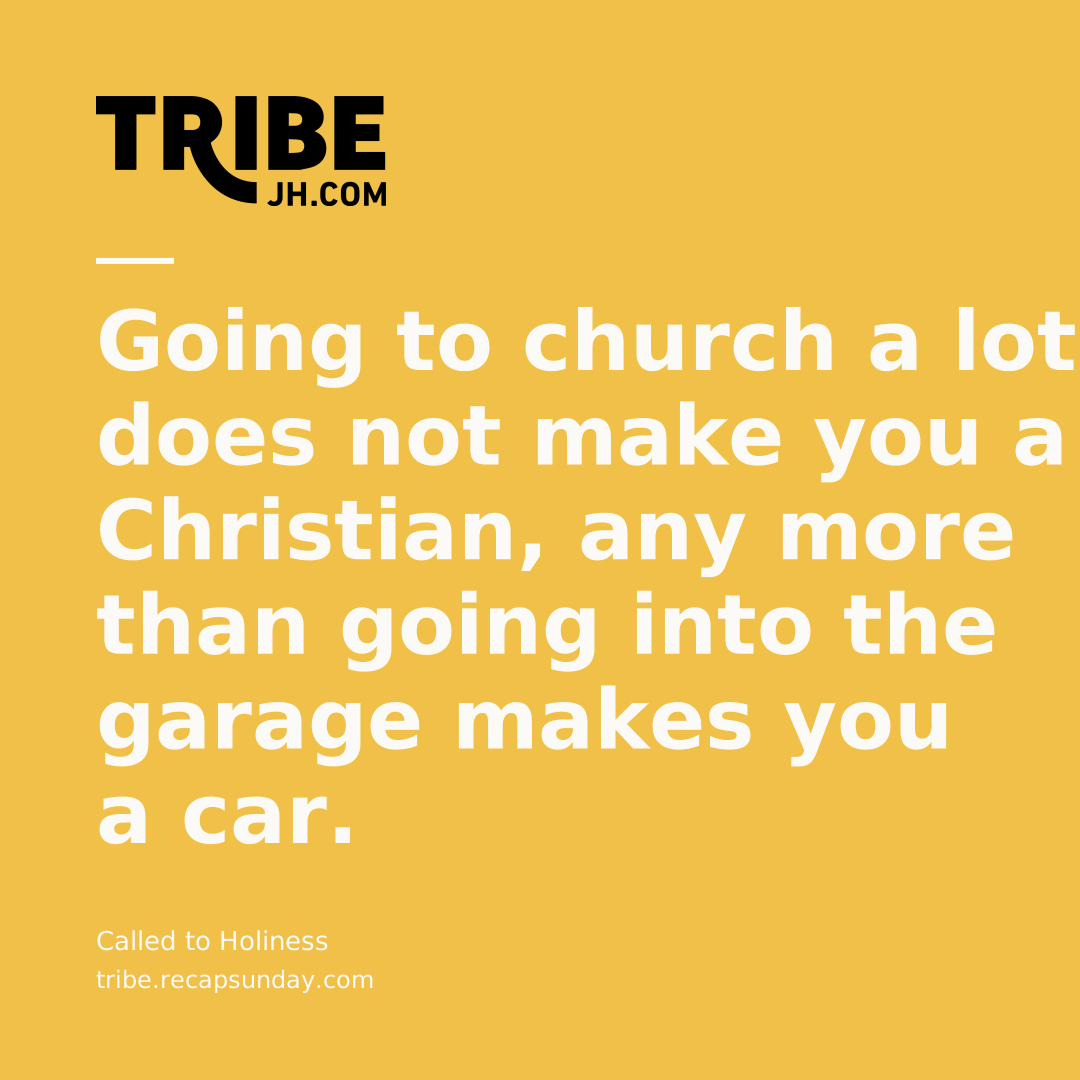
Before getting into the text, Pastor Brian drew a line between churchgoers and Christians. Going to church does not make someone a Christian any more than standing in a garage makes you a car. A person meets Jesus as savior when they are honest that they have broken God's law, bring that burden to the cross, and receive the forgiveness Jesus offers. Out of gratitude for a debt paid that they could never pay themselves, the only reasonable response is to offer their whole life back.
The word holy, in the Greek, means to consecrate, to purify, to set apart and dedicate entirely to the Lord. Pastor Brian held up two identical batteries to make the point. Both batteries are the same. Nothing about them is physically different. But the moment you separate one and mark it for a single purpose, that one is holy and the other is common.
He then pulled in Romans 6 to let the congregation see that contrast in a full passage. Color-coding the verses on the screen, blue for the common and gold for the set apart, made visible what Paul was doing: naming the pull back toward the ordinary and calling believers to offer themselves completely to God instead. The danger he pointed to is getting consecrated and then drifting back into the common pile, becoming indistinguishable again.
A passage from 2 Timothy added another layer. Paul compares people to utensils in a wealthy home, some gold and silver for special use, some wood and clay for everyday use. The point Pastor Brian drew out was that unlike a fork, which cannot change its substance, a person can. When Jesus changes someone from the inside, the enemy will still try to convince them they are wood and clay and have disqualified themselves from being used for anything higher.
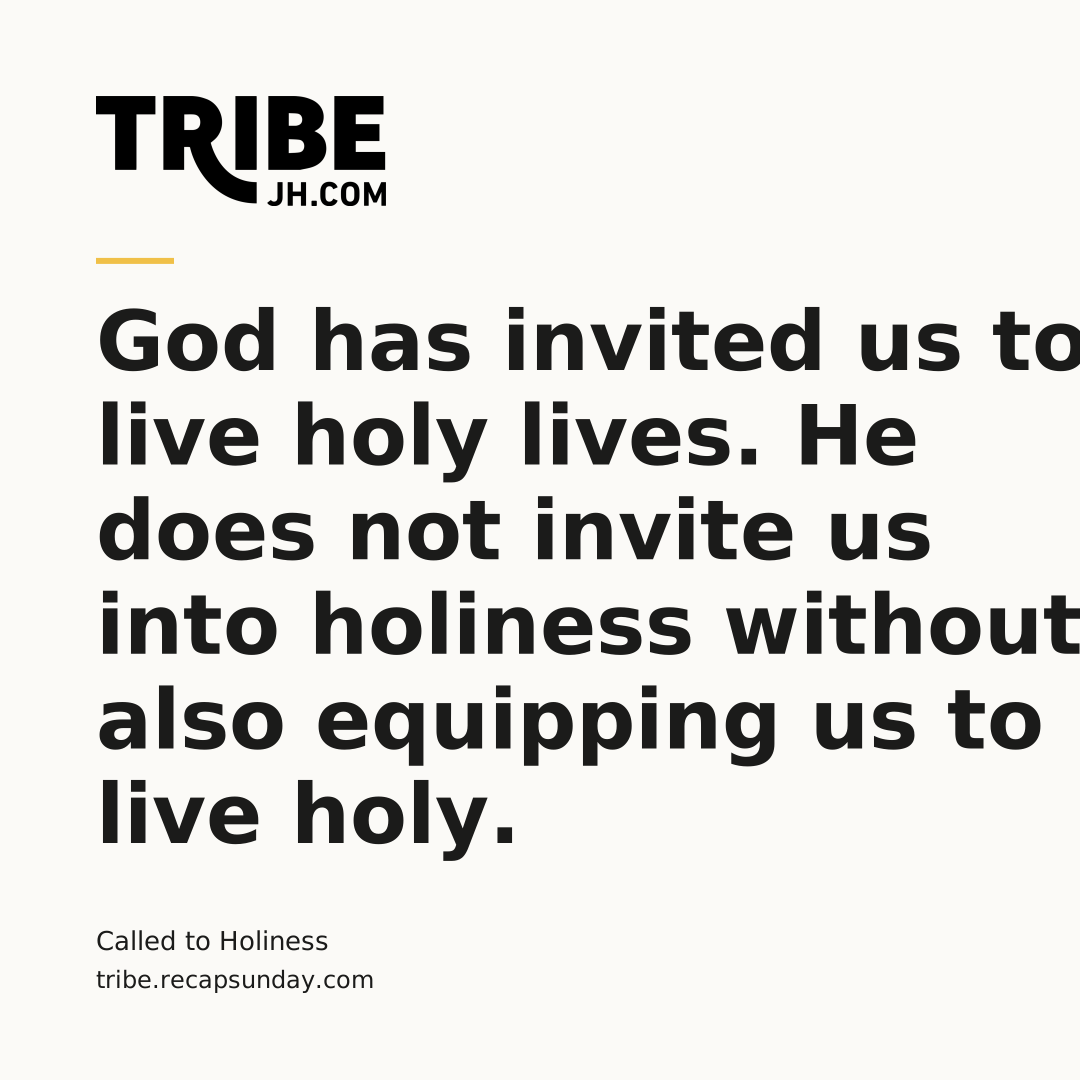
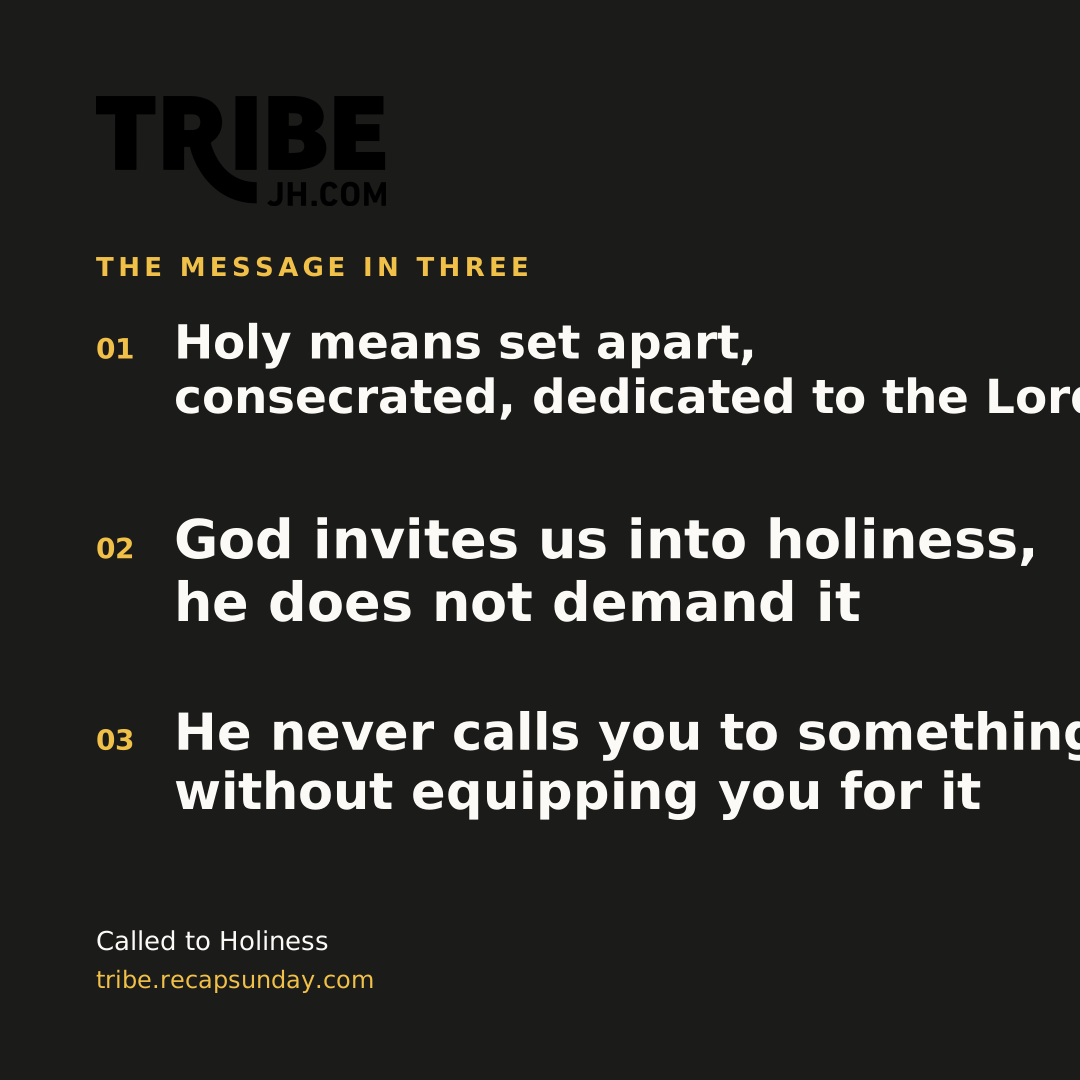
The second word, called, is where the message turned. The Greek includes the sense of an invitation, not just a command or a demand. Pastor Brian used the parable from Luke 14, where the king sends servants out to the highways and byways and under bridges to invite people who never expected to be asked. God calling us to holiness carries that same tone: you are invited.
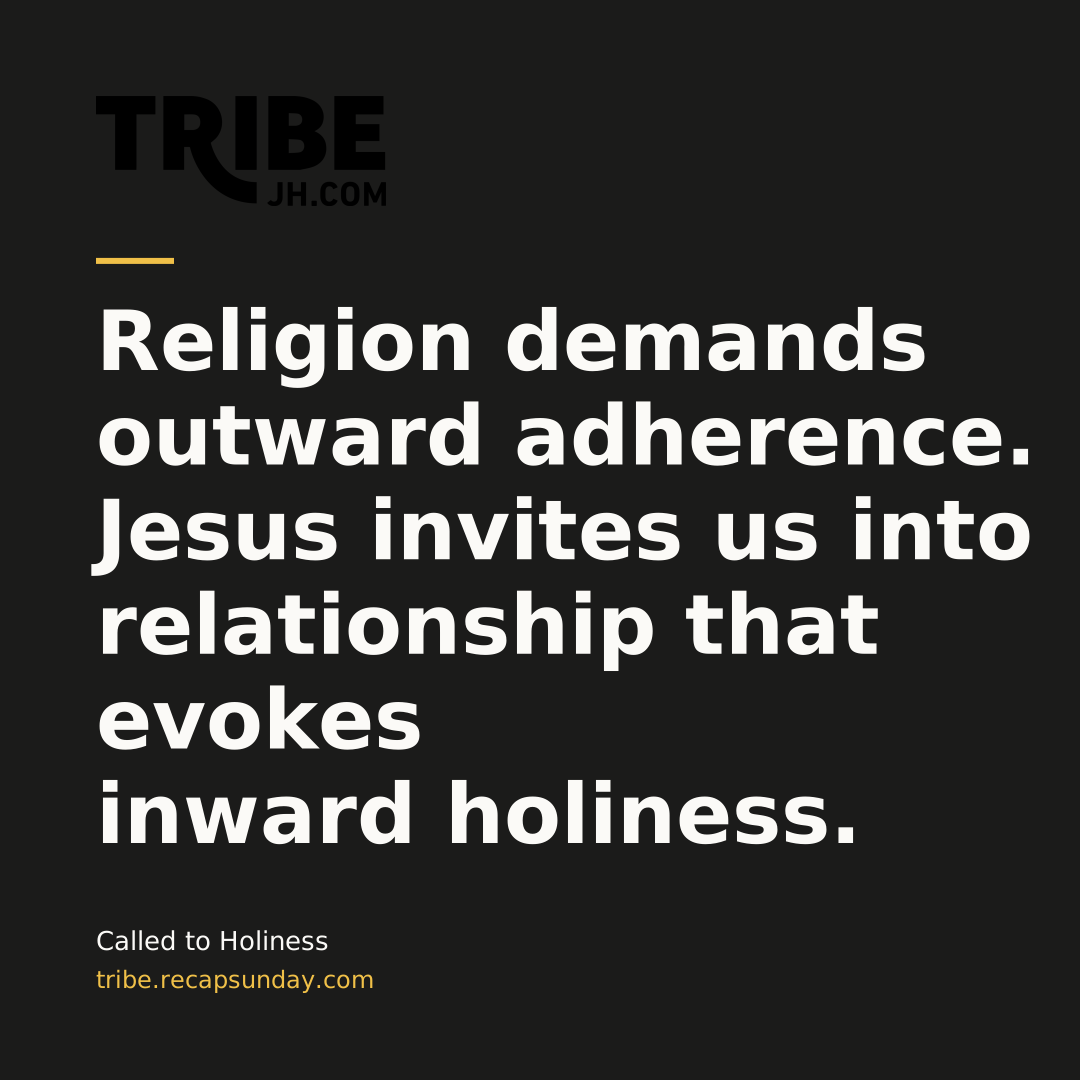
He pressed on what that distinction actually changes. If God demands holiness but does nothing to equip it, he is like a host who invites people over to watch a game and then expects the guests to cook the food, clean the dishes, and turn on the television themselves. The line Pastor Brian came back to was this: religion demands outward adherence, but Jesus invites us into a relationship that evokes inward holiness. The holiness is not manufactured by the person trying hard enough. It comes from the one doing the inviting, who also does the equipping.
Lissa closed the teaching portion by tying it to the Emancipation Proclamation. Slaves who did not know a document had been signed setting them free would go on living as slaves. Prisoners released from prison often keep prisoner habits. The invitation is not just to know that Jesus died and freedom is possible, but to actually change habits, renew the mind, and walk in that freedom day to day.
Touch points
Things you could actually do this week.
Read Romans 6:12-14 slowly this week and mark which phrases describe common living and which describe set-apart living, the way Brian color-coded them in the sermon.
Pick one area of your life where you have been grinding on a treadmill of trying to be good in your own strength, and ask the Holy Spirit to show you what it would look like to receive his holiness as an invitation rather than manufacture it yourself.
Memorize or write down this line from the sermon and sit with it: 'Religion demands outward adherence. Jesus invites us into relationship that evokes inward holiness.'
Read 2 Timothy 2:20-21 on your own and walk through it the same way Brian walked through the Romans passage, looking for what Paul contrasts as common versus set apart.
Fill out a connect card and hand it in, especially if there is something you need the Tribe staff to pray over with you this week.
Doing a Bible study?
Here is a guide we have prepared for you: the passages
in order, questions for the group, and room to write.
Brian talked about the difference between a churchgoer and a Christian, saying that going to church does not make you a Christian any more than going into a garage makes you a car. How would you describe that distinction in your own words, and where do you think you land?
Brian used two identical batteries to illustrate holiness, setting one apart from the other to show what consecration means. What is an area of your everyday life where you find it hard to stay 'set apart' rather than getting mixed back in with what he called the common?
El sermón giró en torno a un solo versículo de 1 Tesalonicenses 4:7, donde Pablo escribe que Dios nos ha llamado a vivir vidas santas y no impuras. Pastor Brian explicó primero la diferencia entre ser cristiano y simplemente asistir a la iglesia, y luego se detuvo a examinar con cuidado dos palabras: "santo" y "llamado". La santidad, explicó, significa ser separado y apartado para el Señor, de la misma manera en que uno toma una batería común y la designa para un uso especial. Usó varias ilustraciones prácticas para que la congregación pudiera ver este contraste de forma visual y concreta.
La segunda parte del mensaje se centró en la palabra "llamado". Brian señaló que en el griego original esa palabra no solo significa declarar o exigir, sino también invitar. Esa distinción cambió el tono de todo: Dios no nos ordena fríamente que seamos santos y luego nos deja solos para lograrlo. Nos invita a esa vida y además nos equipa para vivirla. La frase que resumió el mensaje fue esta: "La religión exige obediencia exterior. Jesús nos invita a una relación que produce santidad interior."
Al cerrar, alguien de la congregación añadió una imagen poderosa: cuando Lincoln firmó la Proclamación de Emancipación, hubo esclavos que no se enteraron y siguieron viviendo como si nada hubiera cambiado. De la misma manera, hay creyentes que no viven en la libertad que ya fue comprada para ellos. El llamado final fue a dejar de correr en la caminadora del esfuerzo propio y recibir la invitación de Dios a una vida santa, sabiendo que él ya pagó el precio.
Pasajes bíblicos utilizados:
1 Tesalonicenses 4:1-8
Romanos 6:12-14
2 Timoteo 2:20-21
Lucas 14 (mencionado de memoria, la parábola del gran banquete)
Romanos 12 (mencionado brevemente al hablar de renovar la mente)
Read the full transcript7,305 words
Welcome to Tribe's podcast. Hey. We just wanna say thank you for making this message a part of your week. Our prayer is that these messages will inspire you to make the name of Jesus famous in your life and to the uttermost bounds of the earth. If you're ever in Jackson Hole, we'd love for you to visit our tribe fam in person.
To learn more about us, you can find us online or at Facebook by searching tribejh.com.
Drink exchange. This morning, if you have a bible with you, would you open to the book of first Thessalonians? If you have your electronic bible, it's so easy to find first Thessalonians. You just scroll down and then you're there. Thessalonians.
Thessalonians. If you have if if you have your electronic bible, scroll down. It's right there. If you have a good old acoustic Bible, gonna have to hunt for it a little bit more. And I always say this because every single one of us started here, but do not be afraid to go to that table of contents and find out like where is the book of first Thessalonians.
Just for reference, for me, it's on page 965. Perfect. Yeah. For whatever that's worth. And we're gonna read a couple of verses together, and we're gonna go to chapter four, and we'll put it up here on the screen.
First Thessalonians chapter four, And one of the unique distinctives here at the TMC Tribe Ministry Center, that's the name of this building, is for us to be really participative. So that was an awkward way of saying is I love it when we collaborate together and we work together on the content that we're going to go through. And so usually what I do to prime the pump to get your participation stoke high is inviting you to read. We're not all gonna read together. That would be too liturgical.
However, if somebody would be willing to read verses one through eight, that would be outstanding. And the reason why we have a mic in the room, I'll ask you to to read into the mic is so that all of our families that are camping and traveling and making the most of this weekend and wherever they are, they'll be able to hear your contribution to our conversation this morning. So, who would like to read first Thessalonians chapter four verses one through eight this morning? And River has the mic in the room and I was on second Thessalonians. That would be very awkward.
Okay. Whoever's got it, go for it. Whoever would like to. Ella, thank you. Finally
then, brothers, we ask and urge you in the Lord Jesus that you as you receive from us, woah, that as you receive from us how you ought to walk and to please God just as you are doing, that you do so more and more. For you know what instructions we gave you through the Lord Jesus. For this is the will of God, your sanctification, that you abstain from sexual immorality, that each of you know how to control his own body and holiness and honor, not in the passion of lust like the Gentiles who do not know God, that no one tran that no one transgressed and wronged his brother in this matter because the Lord is the wow. I I should not have read this morning. Because the Lord is an avenger in all these things as we told you beforehand and solemnly warned you.
For God has not called us for impurity, but in holiness. Therefore, whoever disregards this, disregards not man, but God who gives his holy spirit to you.
Great. What translation were you reading out of? ESV. ESV. Oh, that's a that's a good one.
So, whenever we get into god's word together, it's always important to know who is speaking and to whom they're speaking. That's part of what's known as the broader context. And when you understand the broader context, it helps you to understand or digest or grab a hold of what the author is saying, what he means so that we can get the most out of this. So, first Thessalonians is written, it's a letter written by Paul. It was a church that he visited and helped establish in the place called Thessalonica.
So this is a letter to the Thessalonians. And throughout the book of Thessalonians, he is talking about a wide range of subjects on Christian living. And today, in our day and age, we have sections of bookstores. We even have in certain places in the country. We even have huge bookstores devoted to Christian living.
In those days, once a person met the person of Jesus and he radically changed their life, They had this transformation on the inside of their heart that was working its way to the outside, but they lived in a world that was surrounded by people who didn't think the way that they thought, that didn't act the way that they acted, that didn't have the transformation that they had. And so there was a lot of questions about, well, how do I live my life now? Paul sends this letter to the church in Thessalonica, and you could say, all of Thessalonians, the broad subject is how to live as a Christian. And then when we get to chapter four, if you look at the title, it says, live to please God. So he narrows things down a little bit, and there are two broad things that he talks about in chapter four.
He talks about like you should keep your hands off of other men's wives, very sound advice, and he also talks about the return of the Lord. Those two things are how chapter four got divided in and what I'd like us to do is to look at one specific verse in the passage that we just read and we'll put it up here on the screen. It's chap it's verse seven, and it says this, God has called us to live holy lives, not impure lives. So as we double click on that verse this morning, if you're taking notes, you can write at the top of your notes called to holiness. That's the conversation that we're gonna have today, called to holiness.
And within verse seven, I think I have two words underlined. Yes. Called in holy. As Christians or churchgoers, because I don't want to assume that just because you go to church that you have invited Jesus into your heart, made him the leader of your life. I think that if you go to church and people say, oh yeah, you're a Christian.
I think that does a lot of disservice to people who actually aren't Christians, but they're church goers. You know that going to church a lot does not make you a Christian. Right? Any more than going into the garage makes you a car or flapping your hands like this makes you a chicken. Okay?
So there's a difference between a church goer and a Christian. Now, thankfully, there's a lot of overlap, so that if you do go to church, are a Christian. Woo hoo. And I think it's important for us to just define these kind of terms, especially in the day and age that that we live where there's so much outward religious activity with that is disconnected and void from a person who lives their life under the leadership of Jesus. When you first meet Jesus, you can think of him as a a great teacher.
You can think of him as a historical figure. You can think of him as as a a religious founder. You can think of him as a contemporary radical figure. You can think of him as a moral figurehead or somebody to look up to. All of those things, great, wonderful, awesome.
It's not until you meet Jesus as your savior that he really has any bearing or impact on your life. And a person will never meet Jesus as savior until they realize that they have messed up, that they have blown it, that they have fallen short of God's standards, and no amount of good deed doing will ever make up for or cover the law that they have broken. Is that making sense? When a person is like, oh, they're really honest with themselves and they're really honest with the lord. I have broken your law.
And I know it. You know it. I've tried to paint the picture a 100 different ways. There's no getting around it. I carry this burden of the knowledge that I've messed up and that I've blown it.
Where do I take this heavy burden to unload? And the best place is at the foot of the cross. Jesus. Forgive me. And he says, my blood was shed for the forgiveness of your sins.
And when we receive his forgiveness that he offers and him laying down his life for us out of thankfulness and gratitude, the only reasonable thing for us to do is what? To lay down our life for him. If let's say that let's say that I was short $20. Okay? And here, I'm gonna set you up for success.
I need this back, teenager. Okay. Oh, man. I'm short $20. Could you loan me $20, and I promise I will pay you back?
Okay. Yes. I got $20. So I now am in debt to Oliver $20. When I finally get $20, what is the only reasonable thing for me to do?
Pay him back. Hey. Here's that $20 I owe you. Here it is. So now so now the debt has been settled.
In a similar primitive way, Jesus dies on the cross to pay for our sin. When we receive his forgiveness, he paid a debt that we couldn't possibly pay. He laid down his life for us. And so for the person that has really met and encountered Jesus, the only reasonable thing that we can do is to offer our whole life here. Here's $20.
Here's some gas receipt. Just take the whole thing. Like like, what you've done for me, I could never repay. Take the whole thing. And so that's okay.
I was a little nervous there. So in a similar way, that's what it means to be a Christian. It doesn't mean just going to church. And in the book of Thessalonians, Paul is giving instructions to people who have invited Jesus into their heart, made him the leader of their life on how to live differently. And then we get to this verse.
Chap verse seven. God has called us to live holy lives not impure lives. When you read that, at first glance, you're like, okay. Yeah. I get it.
One sentence and then you just keep ripping on through the text. Okay. Great. Today, we're going to slow down. We're gonna double click on this verse, and we're going to open it up and look at it.
And what we're going to do specifically is just look at two words. We're going to look at called and holy. We're going to look at them not in sequential order. So, we're going to first look at this word holy, Okay? So let's examine this word holy.
In the New Testament, in the Greek, the word holiness, this this definition is not gonna be up on the screen. So listen and write it down. Holiness means to consecrate. It means purification. It means set aside holy unto the lord.
Okay? So, you can consecrate really just about anything. Let's say that okay. Here's another object lesson. I have two batteries.
Both of these batteries are identical, but I wanted to consecrate one. Okay? How would I consecrate one of these batteries? They're both the same. They both look identical.
They both serve the same purpose. They are exactly the same. But if I wanted to consecrate one of them, what would I do? How do you do that? To consecrate, to make something holy.
Yeah. Look. I take these two common batteries, and I take one and I separate it from the other one. Let's make this the holy one. So that this is the common battery.
Even though there's nothing different about it at all. I'm gonna say this is common, and I separate it from the common, and this one is holy. Set aside, set apart, marked, different. In a non spiritual sense, that's what holiness means. Holy, set apart, different.
In a spiritual sense, that word to consecrate or to set aside or to to make something holy is to to set it aside. This is common. This is holy. And to the extra twist is to dedicate it unto the lord. It's only purpose.
It's entire means of existence is for serving the Lord, the God of the Bible. Are you are you with me? Okay. I wanna I want us to look at this idea of holiness in contrast with the common by examining another passage really quickly. So hang a left, and let's go to the book of Romans really quickly.
We're gonna look at Romans chapter six, and I will put it up here on the screen. Romans chapter six verse 12 through 14. And I know that I'm doing a lot of talking. If you need me to pump the brakes, if you have a question, or you want something clarified or if you want to, like, like, add something, just raise your hand. We'll make sure to get the mic to you in the room.
But let's look at compare common and holy. Romans chapter six verse 12 through 14. Paul is speaking and he says, do not let sin control the way you live. Do not give in to sinful desires. Do not let any part of your body become an instrument of evil to serve sin.
Instead, give yourselves completely to God. Okay. Yeah. I have that underlined. For you were dead, but now you have new life.
So, use your whole body as an instrument to do what is right for the glory of god. Oh, verse 14. Praise the lord. Sin is no longer your master. For you no longer live under the requirements of the law.
Instead, you live under the freedom of god's grace. This passage is a great example within these few verses of comparing and contrasting this idea of normal and and common, and we can say unclean or sinful with the holy, the consecrated, the separated, the set apart, dedicated only unto the Lord. So I've given you a little bit of help by underlining a couple of phrases here, but what we're gonna do is we're gonna try to see this principle of the difference between consecrated and holy set apart and just normal, common, old, and sinful. And I've given you a little bit of a head start by underlining this, but I'd like to hear from you. So look at either your acoustic bible right there or up here on the screen and tell me some of the things that you see.
Oh, this phrase sounds like it is a consecrated phrase. This phrase or words or sentence or maybe entire verse, this looks like common, like all of the others. What do you see? Tell me the difference that you see. And just raise your hand, we'll get the mic to you.
Yes. No. It could be anything. Kind of I've given you a little bit of a help here with the underlining. Does my question make sense?
Kind of. Long silences are my jam. You did you did, Clarence. Phil's Phil's got you.
I snuck in behind you. I love it. No worries. So I'm I'm seeing at least in my NIV
Mhmm.
Bible that there's a couple times where it says instead of give yourselves, it says offer yourself. Like an offering, offer yourself to God as those who have been brought from death to life. And so that reminds me of like Romans twelve two, where you offer your bodies a living sacrifice, like this offering that's set set apart and consecrated as a sacrifice. Oh, okay.
Give yourselves completely to God. Two batteries, both the same, taking one of these batteries, offering yourselves completely to the Lord. That's that process of consecration that makes it holy. That's what you're seeing, Phil? Yes.
100%. Great. Well done. What else do you see? Either this distinction that Paul makes between common and consecrated and holy.
Okay. Alright, come on.
So I say the the the first verse, do not let sin control the way you live, to like watching TV. You know, just, you have no control. You're gonna be inundated with compromise whether it is a commercial, whether it is a television show, it doesn't matter. Is no sanctification within the parameters of TV. This is what I'm trying to And use as an you can mute it, you can change the channels, but you're gonna get basically the same thing regardless of where you go.
Sucked in. So, I'll never forget when we first moved to the valley, we were renting a little condo here in town, and then we built our first little house, a little log house in Melody Ranch. And it was the first time that we were married, we built this house, and we had cable TV. And Lissa was like, uh-oh, something's happened to Brian, because it was like a tractor beam to me like, and she's like, do you know what you're watching? And I couldn't answer.
Brian, Brian, Brian, you know, and drool would be coming down. And she's like, you're literally just watching the weather channel. I was like, shake out of it. And we get we can get sucked into, drawn into these things. Your example was TV that that are common, not set apart, not to use a churchy word, sanctified.
I wanna help you out a little bit more with this passage, and we are don't go there just yet, but we're going to color code this passage for you so that you can visually see the difference. Let's color all of the common things blue, and let's highlight all of this set apart things in yellow so that we can see a little bit better visually what Paul is getting at. Okay. Blue and gold, I didn't even realize these are kind of like Argentina colors. I didn't even plan that.
I didn't even plan that.
Okay.
So blue is common. Do not let sin control the way you live. Do not give in to sinful desires. Do not let any part of your body become an instrument of evil and serve sin. Blue is is common.
When you read that, you're like, okay. Yes. Got it. Sometimes, if we're gonna be honest with ourselves, it's easier said than done, but Paul is talking about common. Then he bounces over to the sanctified, the set apart.
Instead, and this is what Phil saw, give yourselves completely to god. Well, back to common for you were dead. Common. Now back to gold, but now, you have new life. So, use your whole body as an instrument to do what is right for the glory of god.
Well, back to common. Sin is no longer your master. For you no longer live under the requirements of the law. So imagine, let's break down that verse really quick. Let's say we have two batteries and we decide to consecrate one of them, set it aside as holy.
What if that battery was like, goes back and starts hanging out with all the other common batteries? How could you really tell it apart on the outside? You can't. You mix them and match oh, and now you you can't tell. So what Paul is saying is if you've invited Jesus into your heart, made him the leader of your life, Jesus has set you aside and the the invitation is to to live according to that, to be consecrated, but don't spend your time getting sucked back into watching the weather channel and becoming common.
Phil. I go go for it, Phil, because I think whatever you're gonna say, we may address to yeah. Phil, what do you got?
I love this analogy. I'm a photographer in a lot of ways, and so I have like a whole bunch of batteries, like five or six batteries, and when they're all dead, I like have them set aside, and then when it's time to charge them, I'll like make sure one goes in the charger, when it's done charging I put it all the way over here, so that way it doesn't get mixed up with the others, and then I have all of them charged, but those charged batteries aren't good until they go on the camera, and are put to use. I was like, okay. So make sure they get put from one side to the other, consecrated, and then are put to use and energized. Brought to life.
Clock it, clock it. And then we have to finish. Instead, you live under the freedom of God's grace. So if you would you go back one previous without the color coding? So when we read this, and it's and I don't have a version that's not underlined, but if you look at this passage in Romans, the tendency, especially, I know some of y'all, many of y'all in here that you have been reading your bible for a long time.
The tendency is to just kind of rip right through it, cruise right through this passage of Romans, and be like, yep, I've read it time and time again. Okay. Okay. Part of what I love to do is to disrupt your pattern, your habit of ripping right through the word like, yeah, yeah, yeah, I've read this. Let's stop.
Let's look at it from a different angle. Let's look at it from a different perspective. Let's actually break it down, talk about it, wrestle with it, and see and and what that does when we disrupt the normal pattern and routine, it gives the holy spirit an opportunity to speak directly to our heart. And when he does and when we submit to it, that's where transformation happens. So, Phil, this is probably a rhetorical question, but how many times have you read this passage in Romans and thought about your camera batteries?
Perhaps never, but now in your heart, God is making connections. And every single time from now on, as a photographer, when you're changing camera batteries and you're setting it out, you're gonna be like, oh, yeah. Set apart, sanctified, holy, and then put to god's use for the for his glory. Will you go back to the color coded? And seeing what Paul is talking about visually represented by color coding these different verses that can also help to reinforce or to reintroduce us to some very powerful concepts that Paul is trying to get through to us.
Yes? So, one more quick example. We're not gonna spend as much time on this and because we got one more word to go through. Second Timothy. So now go back to the right in your Bible.
Second Timothy. I'm gonna put this passage up here on the screen. Second Timothy two twenty through 21. This is a great illustration that Paul is talking about. In a wealthy home, some utensils are made of gold and silver and some are made of wood and clay.
The expensive utensils are used for special occasions, and the cheap ones are for everyday use. If you keep yourself pure, you will be a special utensil for honorable use. Your life will be clean, and you will be ready for the master to use you for every good work. So I gave you that passage in Romans as an example. Then I selected another passage, and now for you, this week, whenever, later today, whenever, now you can apply what I've taught you to this passage.
Go through, examine the passage, see where you can find something that is the the contrast that Paul is making. Common, sacred, set apart, sanctified, holy. Let's just verbally just give me one or two things. Tell me something that you see, and you can just say it out. You don't need the mic.
Tell me something that you see that Paul's getting at that is holy, sanctified, set apart, and then something that you see that is common. Like, it's really obvious. Wood and clay common.
Set apart.
Gold and silver set apart. But interesting, they're both utensils. So I wrote this in my notes. In the analogy, Paul uses forks and spoons made of different substances used for the same purpose, which is eating. Even though a fork can't change its substance, here's what's really cool about our lives, is that Jesus can change our substance and nature.
And when you invite Jesus into your heart, make him the leader of your life, You have the Bible says that you are a new creation. It is that world. It is our past. It is that old dirty devil that would try to lure us back into being common and if we've messed up, if we've blown it, if we've made mistakes, that the enemy would try to remind us of those. You are not a utensil of gold or silver set aside for god's highest purpose.
I saw what you did back then. Come on. The enemy would try to tell you like, come on. The best you can be is something wood and clay. Come on.
You're you're coming. You've you've disqualified yourself from being set aside, used as god's highest purpose And nothing could be further from the truth. And that leads us to going back to verse seven to look at the second word. God has called us. So now we're back in first Thessalonians.
God has called us to live holy lives, not impure lives. So we talked about that word holy. I want us to spend just a few moments on this word called. In the Greek, whenever you read that word, in English, the word called means to call aloud river. To salute by name, to bear a title.
For example, when you see Michelle Weber walking down the street, you would say, good morning, chief Weber. That's her title. Right? She's chief of police here in the town of Jackson. So to salute by name or to bear a title, Michelle Weber bears the title of the chief of police.
But then here is what's really cool. This is the meat and the heart of what the holy spirit was doing in my life that I'm sharing with you. The in addition to this word call meaning, in English what we think of it as to call, it also means to invite. And if you're not like, yet hang hang in there with me. Remember the story, a parable that Jesus tells in Luke chapter 14.
You don't need to turn there but Jesus is talking about the kingdom of god and in this parable, he says that a king prepares a huge banquet feast. All inclusive barbecue for all of these fancy people. I mean, if you're the king, you hang out with fancy people. So he's like, I'm having a barbecue. I want everybody to come and hang out in the in the backyard, and the food is fancy.
The backyard is fancy. There's peacocks in the back. I don't know. It's like the fanciest thing I could think of. If you ever go to somebody's house, ice sculptures of peacocks.
Chocolate. Yeah. Okay. Yeah. Yeah.
I mean, that's like the like, if you ever go to a house party and they have peacocks, you've arrived. You really have. You really have. And so the invitation goes out to all of the king's fancy friends, and they all come up with excuses. And then he's like, oh, man.
That's it. And then as the parable unfolds, Jesus tells as Jesus tells the parable, the king says to his servants, alright. None of those people are coming. Fine. Scratch them off the list.
I want you to go in the parable says it to the highways and the byways. I want you to go I want you to go on the country roads. I want you to go on the trails. I want you to go up into the hills. I want you to look under the bridges.
I want you to to lift back cardboard boxes. I want you to go to the city dump. I want my party to be full of people. And for the rich people, they're not even they're not they're no longer invited, but I want you to go out in and seek those people that think that they would never be invited, and I would like you to call them to this party. I would like you to invite them into this banquet feast.
We go back to verse seven in Thessalonians. A lot of people read this verse. God has called almost as to declare, to demand. God has called us to live holy lives. What are you doing being impure?
I have called you. I demand this of you. I command this of you. And if you don't, if you drop the ball in any way, that's it. The word called in Greek, the definition includes to invite.
God has invited us to live holy lives. Now, let's use one more analogy here this morning as we start to land the plane. Imagine if god invites you to live a holy life, but he doesn't equip you or help you to live a holy life. It would be the same as inviting people over to your house like, hey. You guys wanna come over and watch the World Cup final today.
You wanna come over and so you invite people to over to your house. But when the people get there, you're in the backyard, I don't know, trying to construct a peacock pin or something. And there's no food prepared. The house is dirty. The TV is not even on, and the people come over, and they're like, hey.
We gonna watch the game? And then and then the host says, turn on the TV. Are there any snack? Why don't you go to the cupboard and get some snacks out? Maybe a clean cup for getting a drink.
I'm a little thirsty. All this nacho cheese is kinda clogging me up here. Why don't you wash some dishes? What host would ever imagine doing that? And if you were ever invited to somebody's house and you receive you'd be like, oops.
My grandmother's calling me. I gotta go. Like, you get out of there so fast. But yet, this is how many people live when they read this verse. God has called us.
He expects us. He demands us to live holy, but the holy living is entirely up to us. That's the same, and he just sits back, and he's got a little scorecard, and he's watching. When you do something good, he's like, k. I'll make note of that.
When you mess up, he's like, and he takes a picture like, when you messed up, you blew it. It's the same as inviting people over to your house, but but you get mad at them when as a host you haven't provided what is common and expected. This my prayer is that you would see this verse differently. God has called us. Meaning, he has invited us and he does not, he's a good host.
He does not invite us into holiness without also live holy. One last analogy. Imagine going to you have a some sort of science major in college and you're in your first collegiate advanced level math class. And on the first day, the math professor walks into the room and he says, I am the advanced mathematics professor. You will get an a.
Would you not be intimidated? You'd be very intimidated. But what if that same professor walks into the room and he says, I am the professor of this advanced mathematics class. You're gonna get an a. One sounds demanding without any implication of equipping.
The other is like, wouldn't that, wouldn't that set your little nervous heart at rest? You're going to get an A. He's going to help me. Yeah. Yes.
God has invited us to live holy lives. He doesn't demand anything from us that he also doesn't go the extra mile to equip us with. I I said it, I said it this way. Religion demands outward adherence. Jesus invites us into relationship that evokes inward holiness.
New Living Translation. Yeah. Religion demands outward adherence. Jesus invites us into relationship that evokes inward holiness. So, maybe you have found yourself on a treadmill of trying in your own effort and strength to the easiest way to put it is be a good person.
And maybe you're being a good person because that's what you think is expected of you. Maybe you're trying to live as a good person because you know your own score card that you've messed up, that you've blown it, that you've fallen short, that there's stuff in and so there's you're trying to make up for your commonness, your failure, that you know on the inside, you're trying to make up for it with all of this outward being a good person's stuff. Jesus came to take all of those things and just sweep it off the table and he says, I offer you a different way to live. Don't be common. Be holy.
But that holy is not that holy is an invitation that he equips us with. So, let's just take a moment with a few moments that we have left and let's ask the Holy Spirit. Is there any area of our lives that we are trying to manufacture this holiness? Be a good person. And listen for the voice and the person of the Holy Spirit.
Maybe not here between our ears but here down in our heart, our knower, that he would invite us to receive and walk in and be equipped with his holiness. Here's how I want you to live. So, lord, would you whisper afresh to our hearts that invitation to holiness that we can live our lives set apart different. Highest purpose and maybe for somebody I feel like for somebody today this invitation is like, oh my gosh, I can get off the treadmill. Just come, Lord.
What an incredibly beautiful picture of our heavenly father, an invitation to holiness is infinitely better than a demand for holiness. Who can do that? Who would want to do that? And so I'm just thinking about what we talked about today and then the song, I was made for more. And the thing I thought of was, like, the late eighteen hundreds when there was slavery and Abraham Lincoln signed the Emancipation Proclamation, what if there were slaves who did not know that a man had signed a document that set them free?
They're still gonna live as slaves. So when we read this passage today, Paul is inviting at that time the Thessalonians, but the invitation is extended to us today, as Brian said, to live free. And then, you know, statistically, when prisoners are released from prison, they still have prisoner habits. You have to, like, renew your mind as the Bible talks about. You have to renew your habits.
And so today, let this just be an invitation. Let that's such a beautiful word, and it's so accurate. An invitation to change our habits, to live in a holy way. We're humans. We're not gonna do it perfectly.
But like we just sang, we were made for more. But we're we're not just automatically gonna live for more. We have to change our habits. We have to know who we are in Christ. We have to know that that document was signed.
Metaphorically, I mean, like, that Jesus died on the cross that you started with Brian. That blood was shed for us, but we need to live and walk in that freedom and it's not just going to happen. It's an invitation. So, let's be people who walk in that freedom for sure. One of those, one of the things that we do when we come together as a tribe families, we bring our tithe and our offering.
Every local church does it. But again, within line in line with what we're talking about today, it's not just like, oh, we're at church, you know, throw some money in the bucket because it's the right thing to do. It's not philanthropy. It's obedience to the lord and so, when we give, again, it's an invitation to keep your heart calibrated to our heavenly father. It's not a demand.
Icky, icky, icky. It's an invitation. It's a way god is so brilliant. He knows that money can have a grip on us whether we have negatives, billions, anywhere in between. Money is one of those weird things that can just get a grip on you.
And so such a beautiful thing that the local church has where not only when you bring your tithe and your offering, whether it's tribe or somewhere else, it's not just paying for the lights and the whatever. It's to be the hands and feet of Jesus. It's to go and do the local work of the ministry. Give people food that don't have it. Give people a place to stay that don't have like there's so many.
We get to be the hands and feet of Jesus. But it also much deeper keeps our hearts calibrated to our heavenly father. It's an invitation when we bring our tithe and offering to say, yes or no. It's totally up to you. But whether you're giving today or another time, we're just gonna pray and then I just don't think we have any announcements today.
I'm get you guys out of here. Real quick ways to give. If you have cash or check, something tangible or physical, we have a little box behind clay and we have an, well, nope, it's not there. Yes. Is.
And we have a little box here, or downstairs, we have a lockbox you can give cash or check. And then on the screen, you see the easiest way to give if you have a smartphone is just to send a number. You open up a text like it's a new friend, and you type the word give, do the dollar sign, and the number, the amount you want to give and it's to 8333697847 and our website always. So, that's practically but let's just pray together. Heavenly father, we just adore you.
Thank you so much for who you are. Thank you that you are such a gentleman that you invite us into these things. Thank you that the price has been paid for all of time, for our sin. You have redeemed us, scripture says. We have been redeemed.
We have been bought and paid for by your precious, priceless blood. Now, lord, let us just walk in the in those ways. Let us act like we're free because we are and when, not if, we just trip up because we're humans and life gets hard. Lord, let us just be a people that are quick to repent. Get us right back on track.
Dust our britches and get back on track. Thank you so much that you're such a loving heavenly father. We just adore you. I pray for the tithe and the offering that is brought in today. Lord, let every penny go to do the work of the ministry.
Let us be good stewards always, not just of money but of our relationships, of our time, the things that you have given us. We are so grateful and so thankful. In Jesus name, amen. Before you leave, you might have sat on one of these connect cards. If you want to know what's going on around here, you'll get a text from time to time.
If you
want to fill out your information here and then on the back, there's just a place for prayer and tribe staff, we take these very seriously. We look at these. You can just put it in the little drop box on your way out. If you fill it out and we just, there's nothing too big and nothing too small. If you need us to join our faith with yours and pray for something, please do that.
We can do it in person right after service as well. Brian, will you come back? Just
before we get out of here, want to let you know that we're getting closer and closer to being able to jam that for sale sign in our front yard, proverbial front yard here. We're going to, within the next couple of weeks, list the TMC for sales so that we can be quick and nimble to either respond quickly to another opportunity that comes up for us to purchase, whether that's a building or, I don't know, maybe dirt. We're not quite sure what that is yet, but you've heard us talking for a couple of weeks and months about how we're gonna be selling the the TMC. And I understand if you have nostalgic feelings or if you per if your personality is resistant to change. I know it's it's tough.
Just come over here. I'll give you a hug. We'll broom you. It's going to be okay but it's going to be a great great thing for us to be able to sell the TMC so that we can move into the next thing that god has for us. So, over the next couple of weeks, we're cleaning scuffs off walls.
We're we're getting things ship shape and you'll see that sign soon out there but don't worry, it's a good thing. Everybody say, it's a good thing. It's a good thing. Alright. If you need to convince yourself of that, go ahead.
Happy to answer any questions that you may have for it, or if you wanna buy this, just come and see me. We'll get this deal done right away, okay? Stand up. Let me pray for you. Lord Jesus, thank you that you have called us to holiness.
It's not a requirement, a demand, but it's an invitation that you equip and empower us to walk in. Lord, my prayer for our Tri Fam is that this week, we would step into greater and greater measures of holiness, to live differently so that this lost and dying world around us can see that there's something different on the inside of us. Use our lives to make your name famous this week, Jesus. I command blessing on each and every person here this morning. Give us a great week.
Help us to continue to enjoy all that's left in the summer. We pray these things in Jesus name, the strong son of god and everybody said, I love you so very much. Have a great week and remember, you got this. If you need a plate